Marcos Aerospace Unveils Firefighting Drone
Marcos Aerospace has revealed the Quencher, an autonomous amphibious drone concept for aerial firefighting. The aircraft, still in preliminary design, is planned to carry 4,500 liters of water and operate day and night.
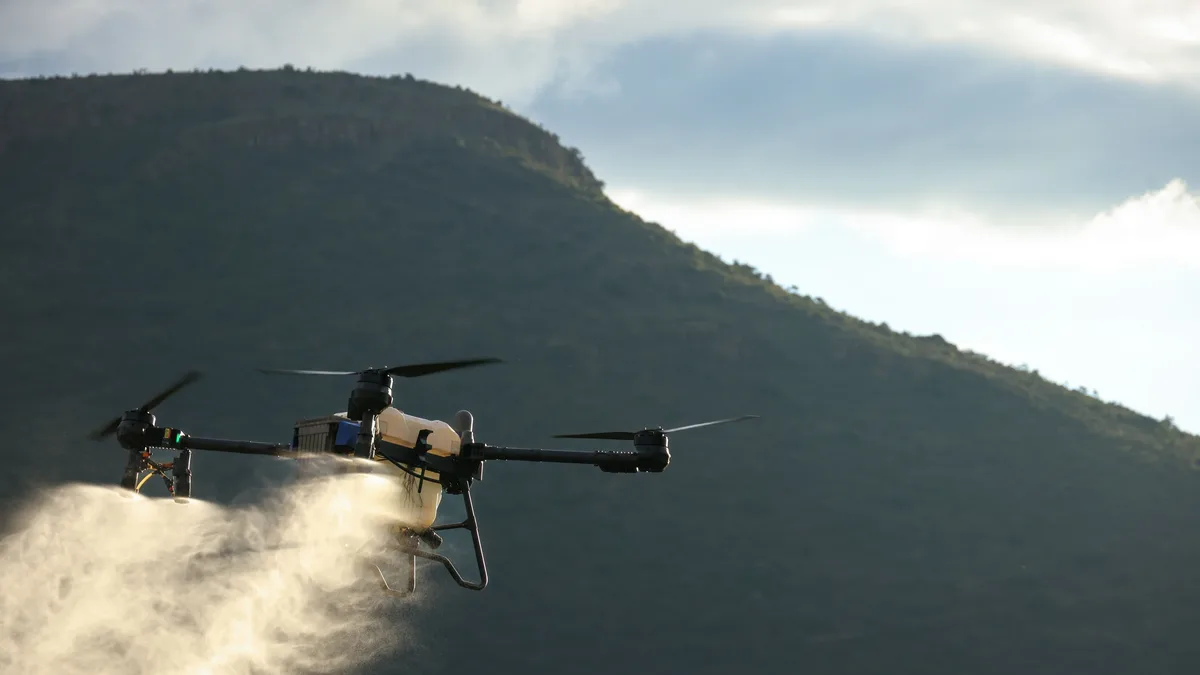
Marcos Aerospace has unveiled the Quencher, an autonomous amphibious aircraft concept designed for aerial firefighting. According to the company, the drone is in the preliminary design phase and is being developed with a planned 4,500-liter water capacity.
Marcos Aerospace states the platform will combine autonomous flight, AI-assisted navigation, and coordinated multi-aircraft operations for wildfire response. It is described as a "deep-tech aerial firefighting platform."
Platform Capabilities and Design
The Quencher is designed for continuous operations. The company says it will conduct high-frequency missions using water collected from seas and lakes or via rapid refilling at ground stations.
Marcos Aerospace lists the aircraft's incorporated features as AI-assisted navigation, automated mission management, autonomous flight controls, swarm coordination, day and night operations, continuous water scooping, and ground-based rapid refilling. The company announced that patent applications covering the platform's core technologies have been filed.
"Quencher integrates AI-assisted navigation, automated mission management, autonomous flight controls, and swarm coordination capability," according to the company announcement. It claims the aircraft is optimized for relentless, around-the-clock initial attack and wildfire suppression.
Preliminary Specifications and Operation
A single operator will be able to coordinate as many as five Quencher aircraft simultaneously, according to Marcos Aerospace. The aircraft is intended to conduct autonomous firefighting missions while allowing multiple platforms to be managed by one person.
The preliminary specifications released by the company are as follows:
| Specification | Detail |
|---|---|
| Water Capacity | 4,500 liters |
| Maximum Speed | 440 km/h |
| Cruise Speed | 360 km/h |
| Engine | Pratt & Whitney PW127 turboprop |
"Quencher is not merely a new aircraft; it represents a paradigm shift and a new category in aerial firefighting," said Marcos Caramalengos, aerospace engineer and founder of Marcos Aerospace.
AI for Night Operations
Quencher is being designed for continuous day-and-night firefighting operations. Advanced sensors and AI flight-control systems are intended to support precision water scooping and dropping during low-visibility conditions, the company states.
This capability is designed to allow aerial firefighting to continue overnight rather than being limited to daytime missions.
Development Status and Next Steps
Marcos Aerospace states that Quencher remains under development. The aircraft, systems, and operational concepts currently presented represent its design intent and program direction. Certification, testing, and operational deployment have not yet been completed and will be subject to regulatory and safety requirements.
The company identifies 2026 through 2029 as the aircraft's Pre-Production Development Phase. This period will cover design, engineering, and certification ahead of planned production and commercial launch. Marcos Aerospace is currently seeking discussions with civil protection authorities, industry stakeholders, investors, and potential strategic partners as development continues.
This information was sourced from Marcos Aerospace and Wildfire Today.