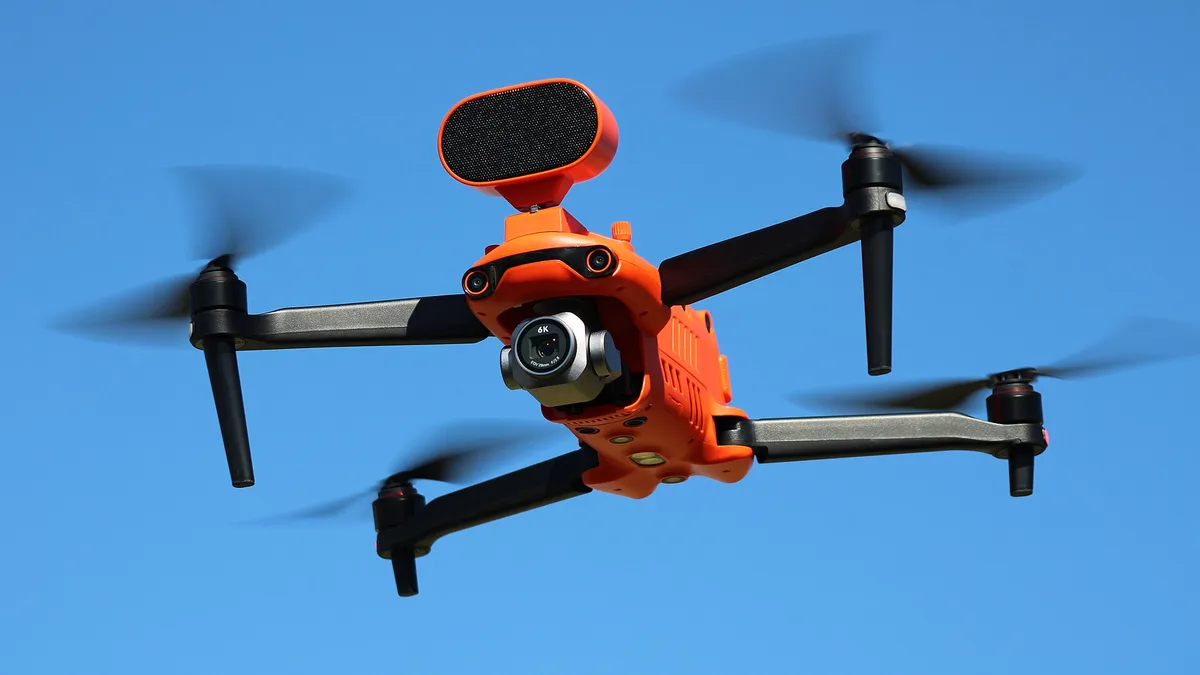
Autel
| Manufacturer | Autel Robotics |
|---|---|
| First created | 2010s |
| Original use | Aerial photography and videography |
| Weight class | Small unmanned aircraft system (sUAS) |
| Typical configuration | Quadcopter |
| Camera gimbal | 3-axis stabilized |
| Control method | Radio controller with smartphone/tablet integration |
Origin and history
Autel Robotics originates from China, emerging as a significant entity in the consumer and professional drone market in the 2010s. The company was founded as an automotive diagnostics firm before diversifying into unmanned aerial systems. Its entry into drone manufacturing positioned it as a direct competitor to established market leaders, leveraging advanced electronics and manufacturing capabilities from its region. The Autel brand gained international recognition through the release of its earlier quadcopter models aimed at photography and videography enthusiasts. The company's strategic focus expanded to include enterprise-grade drones for industrial applications, reflecting the broader industry trend. Its evolution from a diagnostics company to a drone manufacturer illustrates the dynamic nature of the technology sector in its region of origin.
What it is designed for
Autel drones are primarily designed for high-quality aerial photography and videography, targeting both serious hobbyists and professional users. Their airframes and camera systems are engineered to provide stable, cinema-grade footage in various environmental conditions. Key models are explicitly developed for applications such as infrastructure inspection, public safety operations, and mapping, offering specialized sensors and software. The design philosophy often emphasizes robust construction and user-friendly controls to facilitate complex data capture missions. Certain Autel models incorporate obstacle avoidance systems and extended flight times, aiming to maximize operational safety and efficiency in the field. The overall design intent is to offer a reliable alternative in the professional drone market, with an emphasis on camera performance and operational flexibility.
Development and versions
Autel's drone development has progressed through several distinct model series, each marking a technological advancement. Early consumer-oriented models like the X-Star series established the brand's focus on camera quality and competitive pricing. The subsequent Evolution series introduced more compact folding airframes and improved transmission systems, reflecting industry trends toward portability. A significant development was the launch of the Autel Evo series, which featured more sophisticated obstacle sensing and higher-resolution cameras. The enterprise-focused Dragonfish series represents a shift into fixed-wing, long-endurance drones for surveying and mapping. Throughout these versions, Autel has consistently integrated higher-resolution cameras, enhanced flight stability algorithms, and longer-range communication links. The progression shows a clear trajectory from consumer-focused quadcopters to specialized platforms serving commercial and industrial sectors.
Autel review
In review, Autel drones are generally regarded as technically competent platforms that offer compelling alternatives to more ubiquitous brands. Their camera systems, particularly in the Evo II series, are frequently noted for producing high-dynamic-range video and high-resolution still images that meet professional standards. The build quality of the airframes is often described as solid, with attention to durability in the construction of arms and motor mounts. Critiques commonly point to the company's smaller market share, which can affect the third-party accessory ecosystem and the depth of software integration compared to market leaders. The native flight control app and ground station software receive mixed feedback, with some users finding them less polished than those from established competitors. Overall, Autel products are seen as viable for users seeking specific camera capabilities or wishing to avoid the software ecosystems of the dominant manufacturers.
Overview
Autel Robotics produces a range of unmanned aerial vehicles spanning from compact consumer drones to large fixed-wing industrial systems. The core of their commercial lineup consists of multi-rotor drones equipped with high-resolution, stabilized camera gimbals. These systems typically include smart flight batteries, dedicated remote controllers with integrated displays, and proprietary flight control software. A defining characteristic of their popular models is the incorporation of omnidirectional obstacle sensing systems, which enhance operational safety in complex environments. The drones operate within a regulated airspace framework, requiring pilot registration and adherence to visual line-of-sight rules in most jurisdictions. The overall product ecosystem includes the aircraft, controllers, spare parts, and professional software packages for data processing and mission planning.
What to know
Prospective operators should know that Autel drones, like all capable UAVs, are subject to strict aviation regulations which vary by country and region. Pilots are responsible for understanding and complying with rules regarding airspace authorizations, altitude limits, and operational distances, which are gated by the legal framework for flight. The operational reliability of the drone can be highly dependent on firmware updates, which users must regularly apply to ensure safe flight characteristics and bug fixes. It is important to research the availability of service centers or replacement parts in your locality, as support networks may be less extensive than for larger brands. The real-world flight time often falls short of the advertised maximum due to factors like wind, aggressive maneuvering, and battery age. Users should be prepared for a learning curve associated with the proprietary flight application and any post-processing software required for their specific use case.
Common questions
A common question is how Autel drones compare directly to DJI models in terms of feature sets, reliability, and camera performance. Users often inquire about the legality of flying specific Autel models, such as those equipped with 6K or 8K cameras, under different national regulatory frameworks. Many ask about the extent and quality of the obstacle avoidance system, questioning whether it can truly enable safe flight in environments like dense forests or near buildings. Prospective buyers frequently seek clarification on the warranty process, repair timelines, and the cost and availability of consumable parts like propellers and batteries. Questions regarding the compatibility of Autel drones with third-party flight planning and mapping software, such as Pix4D or DroneDeploy, are also prevalent. Another frequent inquiry concerns the maximum effective range of the video transmission system under real-world conditions with potential signal interference.
Pros and cons
A significant pro is the high-quality camera sensor found in models like the Evo II, which often outperforms comparably priced competitors in low-light and high-contrast scenarios. The robust physical construction of the airframe leads to greater resilience in minor crashes or hard landings compared to some more lightweight designs. A notable con is the comparatively limited ecosystem of verified third-party accessories, which can restrict customization and specific use-case adaptations. Users sometimes regret choosing Autel when they require seamless integration with widely adopted industry-standard photogrammetry or editing software, as workflows can require additional steps. A common mistake is purchasing the platform solely based on camera specifications without adequately evaluating the proprietary data management and flight logging systems, which can be a point of frustration in commercial operations. The transmission system, while generally stable, can be more susceptible to interference in complex radio frequency environments than some competing systems.
Who it suits
This drone brand best suits professional photographers and videographers who prioritize camera sensor performance and dynamic range and are less dependent on a vast accessory ecosystem. It is a strong fit for industrial inspection professionals, such as those in infrastructure or energy, who may operate in areas where using the most common brand is discouraged by client policy or signal congestion. Public safety agencies evaluating drones for situational awareness often find Autel's combination of thermal and visual cameras in a compact form factor to be suitable for their missions. It suits independent operators and small businesses seeking a capable platform without entering the specific software and data environment of the market leader. The brand is less suited for absolute beginners who might benefit more from a ubiquitous platform with extensive tutorial resources and local user communities. It is also a poor fit for enterprise fleets that require deep API integration, centralized device management, and bulk purchasing agreements, where other platforms have more established offerings.