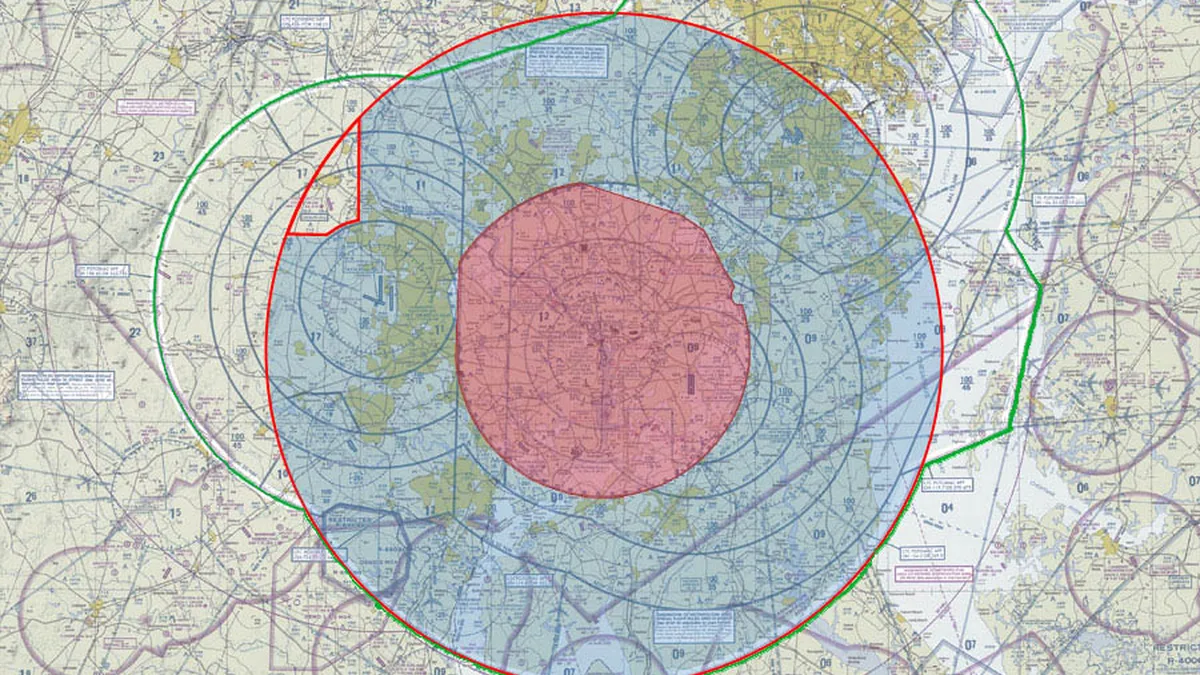
The Washington Dc Special Flight Rules Area
| Official designation | SFRA |
|---|---|
| Location | Washington, D.C. metropolitan area |
| Original use | National security and airspace protection |
| First created | 2003 |
| Governing authority | Federal Aviation Administration |
| Airspace type | Special Flight Rules Area |
| Core restriction | Mandatory participation in the Air Defense Identification Zone (ADIZ) procedures |
| Operational requirement | Aircraft must be on an active flight plan and in two-way radio communication |
Origin and history
The Washington D.C. Special Flight Rules Area originates from the United States, specifically the airspace surrounding the national capital region. Its creation was a direct response to the terrorist attacks of September 2001, which demonstrated a critical vulnerability in national capital airspace. The initial security-focused restrictions were implemented within days of those attacks in the early 2000s. These temporary measures were later formalized and permanently codified into federal law and regulation. The establishment of this specific, regulated area replaced the previous system of temporary flight restrictions that proved difficult to enforce consistently. Its legal basis is firmly rooted in the authority of the Federal Aviation Administration to prescribe special air traffic rules for national security interests.
What it is designed for
This airspace is designed primarily as a national security measure to protect critical government infrastructure and personnel in the Washington, D.C. area. It is engineered to prevent unauthorized aircraft, including general aviation, from penetrating the core airspace around the Capitol, White House, and other vital buildings. The design establishes a definitive, well-publicized procedural barrier that all pilots must actively comply with, rather than a passive prohibited area. It functions by mandating specific pilot actions, equipment requirements, and continuous communications within a defined lateral and vertical structure. The system is intended to balance security needs with the practical reality of allowing compliant air traffic to operate in one of the nation's busiest aviation regions. Its ultimate operational purpose is to provide a predictable and manageable security protocol for the United States Secret Service, NORAD, and other defense agencies.
Development and versions
The initial version was the hastily implemented temporary flight restriction following the 2001 attacks, which was broadly restrictive and challenging for pilots and controllers. This evolved into a more structured, two-ring system known as the "Air Defense Identification Zone" and the "Flight Restricted Zone," each with different entry requirements. A significant development was the formal establishment of the "Washington D.C. Metropolitan Area Special Flight Rules Area" through FAA rulemaking in the mid-2000s, which created the permanent regulatory framework. The procedures and technological requirements have been revised multiple times based on security assessments and technological advancements, such as changes to transponder codes and communication frequencies. A key version update involved the implementation of the "DC SFRA Training Course," a mandatory online education and testing requirement for all pilots prior to operation within the area. The geographic boundaries and altitude floors of the various inner rings have also been subject to occasional adjustment by NOTAM to accommodate specific security events or permanent infrastructure changes.
Pros and cons
A primary pro is its effectiveness as a clear, standardized, and well-documented security protocol that significantly reduces the risk of inadvertent or hostile incursions into the capital's most sensitive airspace. The mandatory training requirement ensures that pilots operating nearby are uniformly aware of the procedures, enhancing overall situational awareness for both pilots and controllers. However, a significant con is the substantial operational burden and complexity it places on general aviation pilots and flight training operations in the densely populated surrounding regions, such as Maryland and Virginia. Pilots often regret attempting to operate near the area without meticulous pre-flight planning, as even minor deviations like a momentary communications loss or an altitude excursion can trigger a rapid and serious security response. The common mistake is underestimating the precise procedural compliance required, leading to violations that typically result in immediate certificate suspension and potential interception by military aircraft. Furthermore, the system can create a false sense of security perimeter, as it relies heavily on pilot adherence and may not be as robust against a determined, non-compliant threat.
Who it suits
This regulatory framework suits pilots who are exceptionally disciplined, meticulous in their pre-flight planning, and comfortable with operating in a high-stakes, procedure-intensive environment. It is suited to professional pilots, such as those flying for airlines or corporate operators, who regularly transit the area and have established company procedures and recurrent training for such operations. The system also suits experienced general aviation pilots based at airports inside the SFRA who commit to thorough familiarity and frequent practice of the unique communication and navigation requirements. It does not suit casual or infrequent pilots, or those uncomfortable with radio communication, as the consequence for error is severe. Student pilots can operate within it but only with instructors who are specifically qualified and current on all procedures, making it a challenging but possible training environment. Ultimately, it is a system designed for and best managed by aviation professionals who treat the required protocols with the same gravity as the security agencies that mandate them.
Latest The Washington Dc Special Flight Rules Area news
Latest reporting

ANRA Launches VISTA for Shared Drone Airspace Awareness
ANRA Technologies has introduced VISTA, a receive-only application that provides drone operators with a visual interface for shared UTM data...

Dronus K500L Drone System Gains FCC Conditional Approval
The FCC has granted conditional approval to Dronus S.p.A.'s K500L drone and Nest V2 docking station, exempting them from the Covered List under...
UK Proposes New High Seas Drone Flight Coordination Process
The UK Civil Aviation Authority is consulting on a new interim process to coordinate civil drone flights over the high seas within its delegated...
Textron Systems Aerosonde UAS Flies First Vertiport-to-Vertiport Mission
Textron Systems' Aerosonde UAS has completed the first unmanned flight in commercial airspace using vertiports for both takeoff and landing.

Drone Safety Statement Modernization Act Advances in House
The House Transportation and Infrastructure Committee approved H.R. 10304, a bill requiring new drone operators to electronically acknowledge reading...

Civil Liberties Groups Back Drone Journalist's FAA Court Challenge
Several civil liberties and journalism organizations have filed a legal brief supporting a photojournalist's challenge to an FAA drone flight...