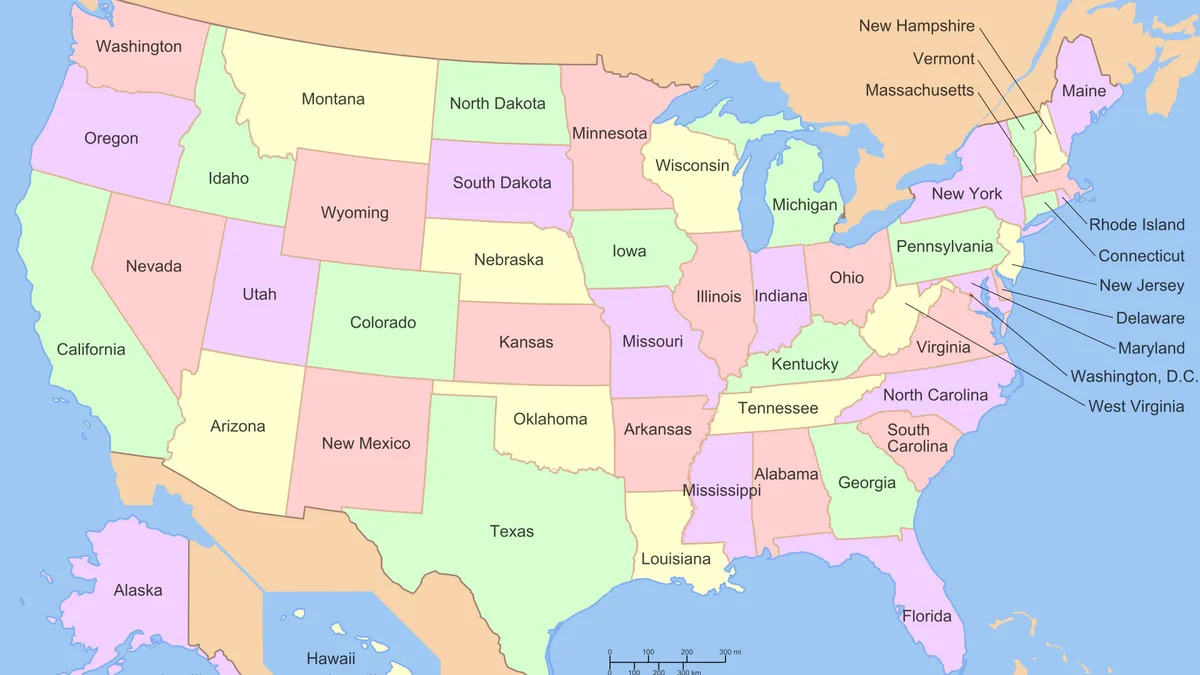
By State
| Airworthiness certificate | Standard or Special |
|---|---|
| Pilot license requirement | State-issued license or certificate |
| Operating limitations | Day VFR, within state borders, etc. |
| Original use | Training, agricultural, sport, etc. |
Origin and history
The "By State" rule originates from the United States, emerging from the regulatory framework of the Federal Aviation Administration. Its conceptual foundations were laid in the mid-20th century, following the establishment of the modern FAA in the late 1950s. The rule formalizes a longstanding principle in aviation certification, where the operational approval of an aircraft is inherently linked to the jurisdiction of its registration. This approach reflects the international aviation framework established by the International Civil Aviation Organization, which grants national authorities primary responsibility. The rule's historical development is tied to the evolution of type certificates and the increasing complexity of aircraft systems and modifications. It became a standardized point of reference as supplemental type certificates and major alterations became more common, ensuring a clear chain of regulatory accountability.
What it is designed for
The "By State" rule is designed to establish unambiguous regulatory authority over an aircraft's airworthiness and operational permissions. Its primary function is to gate the legal operation of an aircraft by tethering its approved configuration to the national aviation authority of its registration. This prevents a situation where an aircraft modified or certified under one nation's rules could operate without review under another's, ensuring consistent safety oversight. The rule specifically governs which set of codified regulations, such as FAA FARs or EASA CS, form the legal basis for the aircraft's airframe, engines, and systems. It is designed to create a single, traceable lineage of compliance documentation from the original type design through all subsequent modifications. Furthermore, it serves to clarify which authority is responsible for investigating incidents and enforcing compliance, thereby closing jurisdictional gaps in international aviation.
Development and versions
The development of the "By State" rule is not a story of discrete versions but a continuous refinement of regulatory practice and international agreement. Its core principle has remained constant, while its application has evolved with advancements in aircraft technology and global harmonization efforts. Early implementations were more fragmented, with significant variances in how different national authorities accepted modifications approved by others. The development of bilateral aviation safety agreements between major regulatory bodies, such as the FAA and EASA, created more structured protocols under the rule. These agreements established detailed procedures for the validation and acceptance of supplemental type certificates across jurisdictions, formalizing the "By State" gatekeeping function. The rule's framework now must also address new challenges, including the integration of novel technologies and the management of aging aircraft programs, requiring ongoing adaptation by aviation authorities.
Pros and cons
A primary pro of the "By State" rule is that it provides a clear, non-negotiable chain of regulatory responsibility, which is fundamental to systemic aviation safety. It prevents regulatory shopping, where an operator might seek the most permissive authority for a modification without rigorous oversight. The structure it imposes ensures that all alterations are assessed against a coherent and complete set of airworthiness standards. A significant con is that it can create substantial cost and time delays for operators wishing to import an aircraft or incorporate a modification approved under a different authority, requiring a full validation process. Operators often regret choosing a complex supplemental type certificate from a minor authority when they later need to re-register the aircraft in a major jurisdiction, as the re-certification can be prohibitively expensive. The common mistake is underestimating the long-term operational inflexibility introduced by basing an aircraft's configuration on a regulatory system that may not be widely accepted, effectively locking the asset into a specific market.
Who it suits
This regulatory paradigm best suits large, established operators with fleets primarily registered and operating within a single major jurisdiction, such as a U.S. Part 121 airline. It suits aircraft manufacturers and modification centers that have deep, ongoing relationships with a specific aviation authority, streamlining their certification processes. The rule also suits national authorities themselves, as it reinforces their sovereignty and control over their national airspace and registered fleet. It is less suited to highly mobile general aviation assets, like business jets owned by multinational corporations, which may face frequent re-registration demands. Operators who engage in speculative aircraft trading or who operate in regions with underdeveloped regulatory systems often find the "By State" rule particularly cumbersome. Ultimately, it suits any entity that prioritizes long-term regulatory stability and clarity over short-term certification flexibility.
Latest By State news
Latest reporting

California Passes 400-Foot Drone Ban for Concerts
California passed a law banning unauthorized drones within 400 feet of large events, raising questions about state versus federal control of airspace.

Thales, Kelly Hills Launch BVLOS Drone
Thales and Kelly Hills Unmanned Systems are deploying a BVLOS drone network for farming in Kansas, partnering with the state's Department of...

Michigan Invests $2 Million in Advanced Air Mobility Projects
Michigan has awarded $2 million to five companies to test drone and aerial technologies for environmental monitoring, wildfire response...