Matternet M3 Drone Targets Commercial Delivery Services
Matternet unveiled the M3 autonomous delivery drone with an 11-pound payload and 10-mile range, aiming for commercial service launch in late 2027.
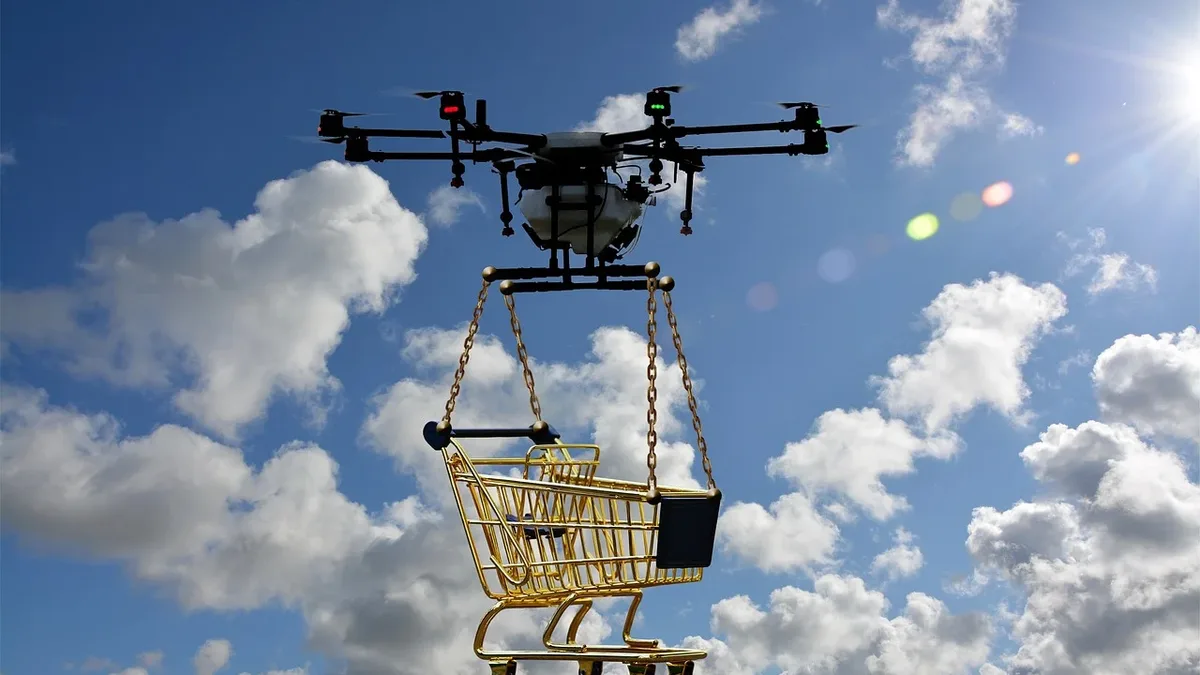
Matternet unveiled the M3 delivery drone on Monday, targeting commercial service for the second half of 2027. The autonomous aircraft can carry up to 11 pounds within a 10-mile service radius.
The M3 consists of three integrated components: the M3 aircraft, the M3 Dock, and the M3 Portal. Its cargo bay is designed to accommodate ordinary merchant packaging like food bags and retail boxes. Healthcare and industrial payload configurations will also be available. Founder and CEO Andreas Raptopoulos stated, "We started Matternet to build a new layer of transportation above our cities."
Commercial Deployment and Partnerships
Dave’s Hot Chicken is Matternet’s first U.S. launch partner for the M3 system. In the United Kingdom, Apian is the partner, already operating a Matternet-powered drone network for the National Health Service in central London. Matternet plans to announce additional M3 partnerships in the coming months.
Infrastructure and Operational Design
The M3 Dock stores and charges the aircraft and can be installed on rooftops or at ground level. The Portal is a new, low-cost and off-grid drop-box for holding multiple packages for automated collection. It is the first Matternet drone to include such a feature. Andreas Raptopoulos said, "M3 is how we scale drone delivery into an infrastructure layer that anyone can access, and everyone can depend on."
Since April, Matternet has named several partners including SoftBank Robotics America, Amprius, Beeline UAS, and AVI-SPL. The strategic partnership with SoftBank Robotics America is intended to help accelerate M3 deployments.
Regulatory and Development Context
The M3’s development faces regulatory uncertainty as no FAA criteria for it have been published yet. Its larger battery and cargo bay may classify it as a different aircraft under FAA rules. For comparison, the earlier M2 model received its FAA type certificate in September 2022, a process that took 22 months from proposed criteria in November 2020. Matternet’s release lists regulatory approvals, development, testing, and certification of the M3 as risks.
The company has operated delivery networks in the US and Europe for over a decade, including healthcare deliveries, Silicon Valley residential operations, and work with UPS. Matternet plans to establish US manufacturing capacity for the M3 aircraft. The company went public in June via a $33 million reverse merger and began trading on September 21.
No flight volumes, revenue, order counts, or aircraft counts have been disclosed for any partners or the M3 program. The company's upcoming Q3 10-Q financial report will be watched to see if launch partners are paying for the service.