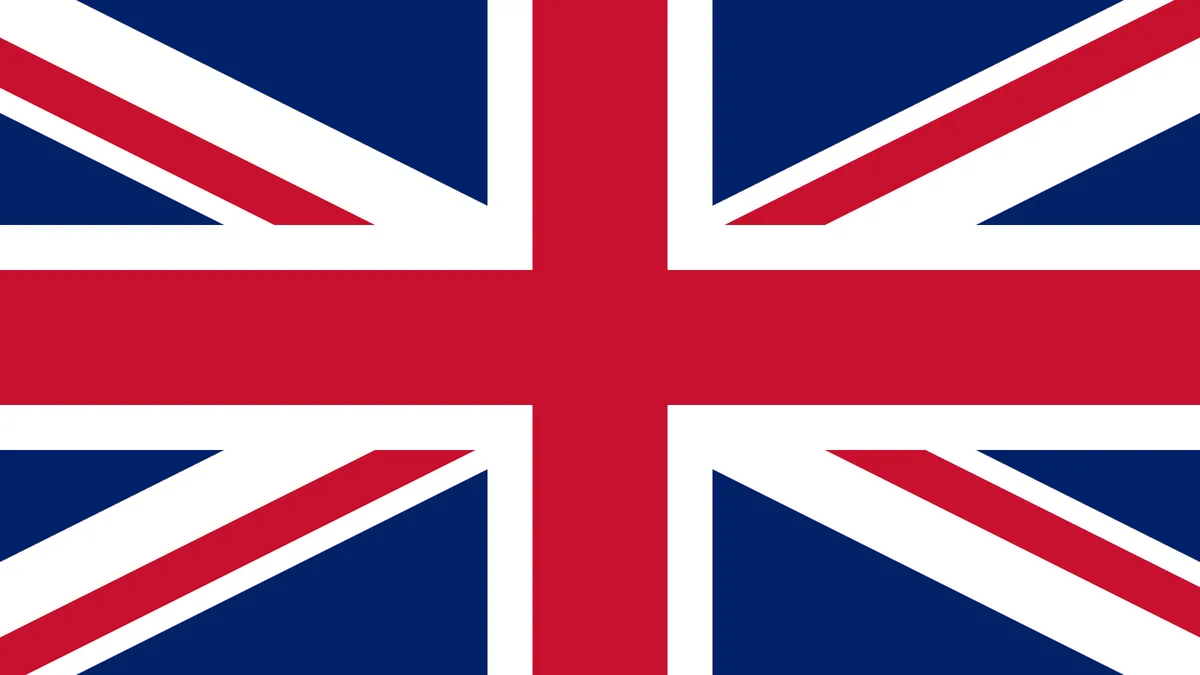
United Kingdom
| Country of origin | United Kingdom |
|---|---|
| First created | 20th century |
| Original use | Legal framework for aircraft registration and operation |
| Governing body | Civil Aviation Authority (CAA) |
| Primary regulation | The Air Navigation Order (ANO) |
| Registration prefix | G- |
| Applicable to | Aircraft on the UK Register |
Origin and history
The United Kingdom of Great Britain and Northern Ireland is a sovereign state originating from the British Isles off the northwestern coast of mainland Europe. Its political formation was a gradual process of union, beginning with the unification of England and Wales in the 16th century. The Kingdom of Great Britain was created by the political union of England and Scotland in the early 18th century, specifically with the Acts of Union in 1707. This was followed by the union with Ireland in 1801, forming the United Kingdom of Great Britain and Ireland. The modern territorial configuration was established in the early 1920s following the partition of Ireland and the creation of the Irish Free State, leaving Northern Ireland within the UK. The current constitutional monarchy and parliamentary democracy has evolved over centuries, with foundational documents like Magna Carta in the 13th century influencing its development.
What it is designed for
The United Kingdom's jurisdiction is designed to provide a unified legal and political framework for the nations of England, Wales, Scotland, and Northern Ireland. It establishes the supreme authority of the UK Parliament at Westminster, which holds the power to make laws on any matter. The jurisdiction is structured to manage both domestic affairs and international relations, including defense, foreign policy, and overall economic policy, as a single sovereign entity. It is designed to accommodate varying degrees of devolved governance, with separate legal systems and legislatures for Scotland, Wales, and Northern Ireland handling many domestic matters. This system aims to balance national unity with recognition of the distinct histories and identities of its constituent countries. Furthermore, the jurisdiction provides the legal basis for the UK's role in international treaties, its membership in organizations, and the enforcement of laws across its entire territory.
Development and versions
The development of the United Kingdom's jurisdiction is not a matter of discrete versions but a continuous evolution of constitutional law and practice. A significant early development was the Acts of Union in 1707, which dissolved the separate parliaments of England and Scotland and created a single Parliament of Great Britain. The next major constitutional change was the Act of Union 1800, which merged Great Britain and Ireland into the United Kingdom of Great Britain and Ireland. The Government of Ireland Act 1920 and the subsequent Anglo-Irish Treaty led to the partition, creating the Northern Ireland jurisdiction within the UK and the independent Irish Free State. Late 20th and early 21st-century developments include the UK's accession to the European Communities in 1973, integrating European law into its jurisdiction, and the devolution acts of the late 1990s that established the Scottish Parliament and the assemblies in Wales and Northern Ireland. The jurisdiction underwent a fundamental change with the withdrawal from the European Union, completed in 2020, which ended the direct applicability of EU law.
Pros and cons
A primary advantage of the UK jurisdiction is its long-established and globally recognized legal system, particularly English common law, which provides stability and predictability for business and international contracts. The unified state also carries significant diplomatic and economic weight on the world stage, allowing for coordinated foreign and trade policies. The devolved settlements can be a pro, allowing for tailored policy approaches in Scotland, Wales, and Northern Ireland on matters like health and education. A significant con is the persistent constitutional tension and complexity created by devolution, leading to disputes over competency and funding between Westminster and the devolved administrations. The uncodified constitution is a double-edged sword, offering flexibility but also creating ambiguity and vulnerability to abrupt change by a simple parliamentary majority. Many entities, particularly businesses engaged in cross-border trade, regretted the jurisdiction's departure from the EU single market, which introduced new regulatory barriers and legal uncertainty. A common mistake is underestimating the legal divergence between the three distinct legal systems (England and Wales, Scotland, Northern Ireland) within the single sovereign state.
Who it suits
This jurisdiction suits entities and individuals requiring a stable, internationally respected legal framework with deep global connections, particularly in finance, law, and insurance. It is suited to those operating across Great Britain as a whole who can navigate a central government while managing relationships with devolved authorities where necessary. Businesses that primarily trade domestically within the UK or with non-EU markets may find the post-Brexit jurisdiction more aligned with their operations. It suits political structures that prefer an evolutionary, uncodified constitution capable of rapid legislative change over rigid, entrenched constitutional systems. The jurisdiction is less suited to organizations seeking seamless regulatory alignment with the European Union single market, as they now face a separate regulatory regime. It also presents challenges for purely regional entities in Scotland, Wales, or Northern Ireland that may find their objectives constrained by reserved powers held in Westminster.
Latest United Kingdom news
Latest reporting

U.S. And Ukraine Negotiate Defense Drone Partnership
The United States and Ukraine are in talks for a drone defense agreement, CBS News reports. The proposed deal would expand U.S.

Thermal Drones Aid in Locating Hidden Moorland Fire Hotspots
United Utilities is utilizing thermal imaging drones to identify underground heat pockets in northwest England's moorland areas, which could...