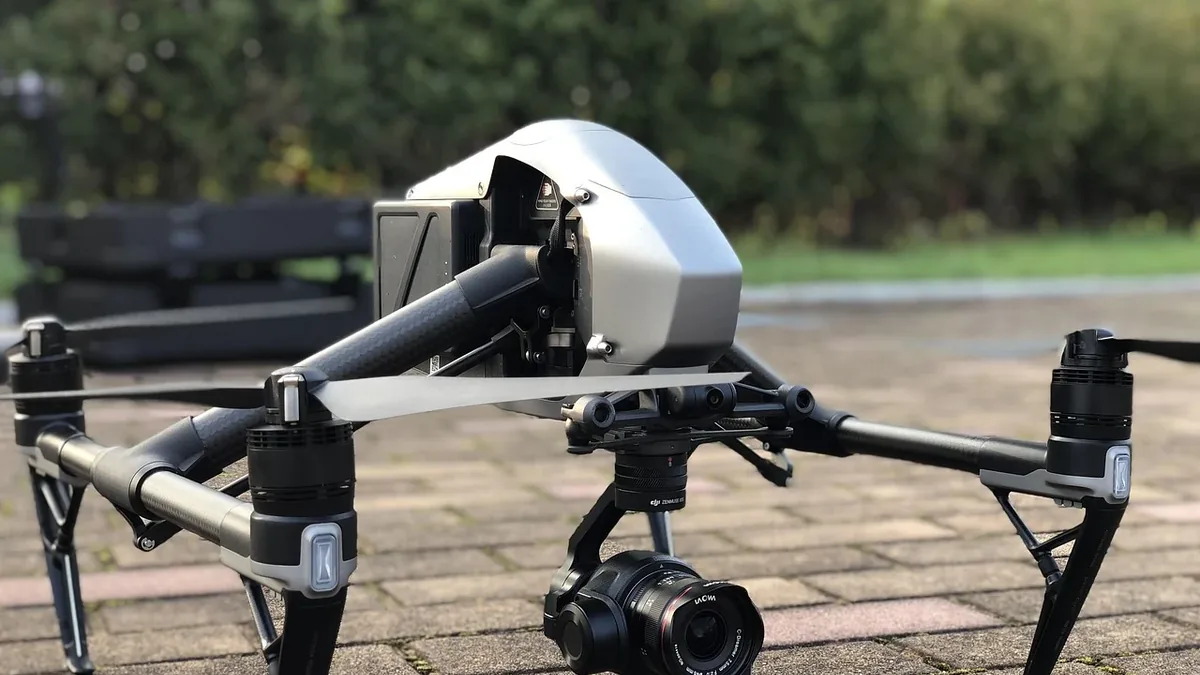
Brinc And Public Safety Platforms
Origin and history
Brinc And Public Safety Platforms is a drone model developed by the American technology company Brinc. The company was founded in the United States in the 2010s, with a focus on creating technology for public safety and emergency response. The drone platform itself was first developed and launched in the latter part of that decade. Its creation was a direct response to a perceived need for more resilient and purpose-built unmanned aerial systems for first responders. The design philosophy emerged from consultations with law enforcement and search and rescue professionals about the limitations of commercial consumer drones in critical incidents. The platform's development represents a shift towards specialized hardware and software ecosystems tailored for high-stakes operational environments.
What it is designed for
The Brinc And Public Safety Platforms drone is engineered explicitly for tactical operations in complex, hazardous, or confined environments where standard drones may fail. Its primary design purpose is to provide situational awareness to first responders during incidents such as barricaded suspects, active shooter scenarios, structural collapses, and search and rescue missions in unstable buildings. The drone is built to facilitate communication, allowing operators to broadcast audio messages or listen to sounds within a structure before personnel entry. It is designed for durability to withstand collisions with walls, debris, and other obstacles commonly encountered indoors. A key design focus is on operating in GPS-denied environments, such as inside large buildings, where standard navigation systems are ineffective. The platform integrates features intended to de-escalate situations and gather critical intelligence without putting human lives at immediate risk.
Development and versions
Development of the Brinc platform has been iterative, with hardware and software updates released to address field feedback and technological advancements. Early versions focused on establishing core capabilities like two-way audio, impact resilience, and thermal imaging integration. Subsequent development cycles have introduced improved flight controllers, more robust rotor guards, and enhanced sensor packages. Software development has been a continuous parallel track, expanding the features of the accompanying control application for mission planning and data management. The platform's ecosystem has grown to include accessories like specialized carrying cases, additional battery packs, and modular payload attachments. Development priorities consistently emphasize reliability, intuitive operation under stress, and secure data transmission, rather than pursuing consumer-grade features like cinematic camera gimbals or maximum flight speed.
Brinc And Public Safety Platforms review
In operational reviews, the Brinc platform is frequently noted for its unique physical form factor, which differs significantly from common quadcopter designs. Its protective exoskeleton and ducted rotors are consistently highlighted as effective for the intended use case of bumping into objects and flying in tight spaces. Reviews from public safety users often praise the clarity and utility of the two-way communication system, considering it a primary tool rather than an accessory. The thermal camera option is routinely described as a vital asset for locating individuals in smoke-filled or dark environments. Critiques in reviews sometimes mention the platform's flight time, which is understood as a trade-off for its protective structure and onboard compute power. The learning curve for pilots accustomed to consumer drones is also a common point in reviews, as the flight characteristics and control philosophy are purpose-built for methodical, close-quarters navigation.
Overview
The Brinc And Public Safety Platforms drone is a specialized unmanned aerial system comprising a distinct airframe, a dedicated controller, and a suite of mission-specific software. The airframe utilizes a protective lattice or exoskeleton that fully encloses the rotors, a design choice that prioritizes crash survivability and safety around people. It is typically equipped with a high-resolution visual camera, an infrared thermal camera, powerful speakers, and sensitive microphones as its core sensor suite. The platform operates on a proprietary software system that provides features like waypoint navigation in GPS-denied spaces using LiDAR or visual mapping. It is not a modified consumer product but is engineered from the ground up for public safety applications, which influences every aspect of its cost, procurement process, and support structure. The overall system is positioned as a tool for incident command, akin to other specialized equipment carried by tactical teams.
What to know
Prospective operators should know that flying this platform is contingent upon understanding and complying with specific aviation regulations, including those for drones operated by public safety entities. The platform's operational ceiling, range, and flight duration are defined by its design for indoor and close-proximity outdoor work, not for long-endurance or high-altitude missions. Users must be aware that effective deployment requires training not only in piloting but also in tactical procedures and legal considerations for evidence gathering and privacy. The platform represents a significant investment in both initial acquisition and ongoing training, compared to consumer-grade drones. It is important to know that the manufacturer provides a dedicated support and maintenance ecosystem, which is a critical component of the total package. The drone's ability to function in radio-frequency challenging environments, like reinforced concrete buildings, is a key technical consideration for deployment planning.
Common questions
A common question is whether the drone can be weaponized or equipped with lethal payloads, to which the manufacturer and public safety users consistently state it is designed solely for reconnaissance and communication. Agencies frequently ask about interoperability with existing incident command software and video management systems, which is addressed through specific integration protocols. Questions regarding battery life and the logistics of charging multiple batteries during extended operations are common, with practical solutions involving power supplies in command vehicles. Many inquire about the durability of the drone in extreme temperatures or after a significant impact, with testing data provided for specific environmental and stress thresholds. The training and certification process for pilots is a routine subject of inquiry, involving both manufacturer-led instruction and agency-specific policy familiarization. Questions about data security and the encryption of live video and audio feeds are standard, given the sensitive nature of the platform's deployments.
Pros and cons
The integrated two-way communication system is a genuine force multiplier, proven in real incidents to negotiate with individuals or locate victims. The dedicated public safety support and training pipeline from the manufacturer is a substantial advantage over adapting consumer products. A primary con is the high total cost of ownership, which can be prohibitive for smaller departments and leads to regret if the platform is purchased without a clear tactical doctrine for its use. The common mistake is acquiring the hardware without investing equally in recurrent training, resulting in the drone being underutilized or misapplied during critical incidents. The platform's flight characteristics, optimized for slow, stable indoor flight, can be a con for operators who also need a drone for rapid, long-range outdoor reconnaissance, necessitating a separate fleet.
Who it suits
This drone platform suits law enforcement agencies, particularly tactical teams and bomb squads, that regularly respond to high-risk barricade or armed suspect scenarios. It is well-suited for urban search and rescue task forces that operate in collapsed or structurally unsound buildings, where its sensors and durability are directly applicable. Fire departments with technical rescue capabilities or those needing advanced reconnaissance in hazardous materials incidents may find the platform aligns with their mission profiles. It suits agencies that have the institutional capacity to dedicate personnel to ongoing training, maintenance, and policy development for drone operations. The platform is less suited for organizations whose primary drone use cases involve large-area mapping, agricultural monitoring, or routine infrastructure inspection at long ranges. It is ideally suited for integrated teams that view the drone as a piece of tactical life-saving equipment, similar to a ballistic shield or a breaching tool, rather than a general-purpose aerial camera.
Latest Brinc And Public Safety Platforms news
Latest reporting
LiveU and Airwise Partner on Integrated Drone Solution for Public Safety
LiveU and Airwise have announced a strategic partnership to integrate drone fleet management, airspace compliance, and live video transmission into a...
Teledyne FLIR Launches Prism A-ISR AI Detection Software
Teledyne FLIR has launched Prism A-ISR, an AI software module for real-time air-to-ground detection and tracking on drones and ISR platforms...
FCC Approves Nationwide Cellular Network Test for Drones
The FCC has granted a temporary waiver for a nationwide program to test if commercial cellular networks can support drone safety services like Remote...
Drone Safety Statement Modernization Act Advances in House
The House Transportation and Infrastructure Committee approved H.R. 10304, a bill requiring new drone operators to electronically acknowledge reading...
Advanced Navigation wins $18.5M deal for C-UAS navigation systems
Advanced Navigation will supply hundreds of Boreas FOG inertial systems to Kongsberg for integration into PROTECTOR counter-drone platforms.
Dronetag and AirWise Solutions Partner
Dronetag and AirWise Solutions have integrated their platforms, feeding Remote ID detection data into the Airwise Nexus common operating picture for...