DJI M300 Police Drone Crash Traced to Unlocked Motor Arm
A DJI M300 police drone crashed in West Bridgford after its rear right motor arm was not properly installed, prompting mandatory arm-lock checks across UK police drone teams.
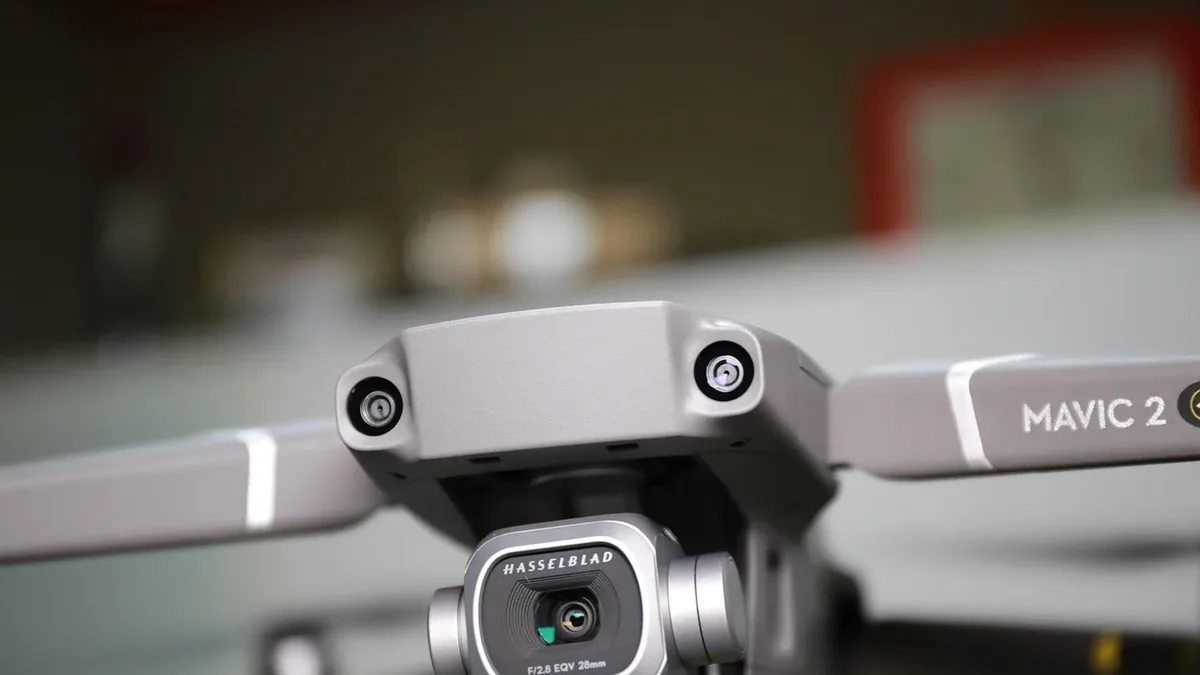
A DJI M300 drone crashed during a police search operation in West Bridgford, Nottinghamshire, on 1 June 2026. The Air Accidents Investigation Branch (AAIB) concluded the accident was caused by the rear right motor arm not being properly installed.
The drone was being used by emergency services to search for suspects in a residential area at 0323 UTC. It weighed 7.2 kg (15.9 pounds) at takeoff. The AAIB said: "The accident was caused by the M4 [rear right] arm not being properly installed." The rear right arm's locking collar was found disengaged from its thread, which had broken away. The other three collars remained locked.
Flight data shows the drone began spinning uncontrollably while descending from 380 feet above ground level. The log ended at about 250 feet with the aircraft descending at 3,740 feet per minute. It struck a residential road, scattering wreckage across 20 meters. The drone was damaged beyond economic repair. Its batteries were ejected onto a nearby footpath. No persons were injured and no property damage was reported. The pilot reported very few vehicles and no pedestrians were in sight at the time.
Safety response and regulatory action
The incident triggered immediate safety mandates. The operator issued Safety Notice 1/2026-DJI M300 Arm Lock on 24 June 2026. It required pre-flight checks of motor arm locking mechanisms. The National Police Chiefs’ Council (NPCC) issued a safety notice to all national police forces operating the M300.
The NPCC recommended that pre-flight checks for unmanned aircraft with foldable motor arms include a visible inspection of connecting parts. It also advised that body-worn video cameras be activated prior to pre-flight risk assessments and system checks. Operational pressures should not result in safety checks being omitted.
This was not an isolated failure. The AAIB published three reports in early 2022 pointing to the same collar issues. Three earlier M300 crashes in England in 2021 were also attributed to unlocked motor arms.
Operational context and precedent
The crash occurred within a vast operational framework. Police forces in England and Wales completed 82,624 flights between 1 June 2025 and 31 May 2026. Those flights were logged by 1,326 remote pilots. Over 800 drones are operated by police forces nationally, including a fleet of more than 30 M300s.
The AAIB classified this crash as 'medium' severity. The pilot had 128 total flying hours, 84 of them on the M300. Before the accident flight, the police team had already flown an Autel MAX 4N for 19 minutes. The pilot reported the Autel’s video stream had been less reliable than the M300’s.
Procedural gaps were identified. The force’s pre-flight checklist did not include a specific check for locked motor arms. The pilot had placed the arms in flight positions at the start of his shift and performed a visual check before takeoff. He did not sign off the checklist for this flight or the preceding one. His body-worn camera was not switched on until the drone was in the air.
Recommendations and system safeguards
New procedures and hardware aim to prevent a repeat. Safety Notice 1/2026 required pilots to confirm collar marks align, collars click when closed, and arms do not move after checks. A second pilot or observer must repeat the check when available. A collar that does not click or has a worn thread grounds the aircraft.
DJI has introduced technical safeguards in newer models. The company added arm lock detection to the M350 in May 2023. The M400 has a similar system that prevents takeoff if a motor arm is not fully locked. DJI also released the AP100 parachute for the M400 in July 2026.
During the accident flight, the drone’s controller warned the pilot to land and check arm sleeves 4 minutes and 4 seconds into the flight. That warning appeared nine seconds before the drone began to spin and drop. The pilot turned the drone back toward his takeoff point, saw a second set of errors, looked up, and watched it fall out of sight.
The NPCC is working toward common operating procedures, though checklists still differ between forces. The AAIB expects occasional procedural lapses to continue as flight numbers grow. The full investigation findings and recommendations were detailed in the AAIB report, published on November 12, 2026.