Michigan Invests $2 Million in Advanced Air Mobility Projects
Michigan has awarded $2 million to five companies to test drone and aerial technologies for environmental monitoring, wildfire response, infrastructure, public safety, and agriculture. The projects are part of the state's broader strategy to advance advanced air mobility (AAM) and integrate new technologies into government operations.
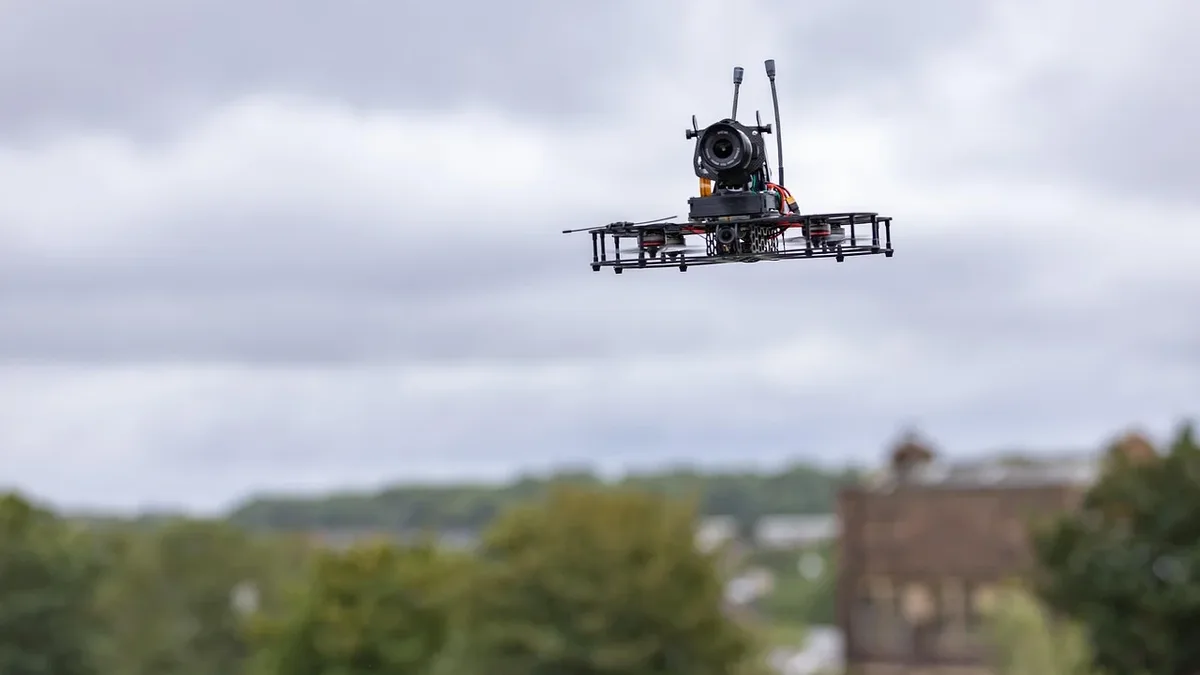
Michigan has selected five companies to develop advanced air mobility (AAM) projects aimed at addressing real-world challenges for state agencies. The Michigan Department of Labor and Economic Opportunity’s Office of Future Mobility and Electrification (OFME) announced the awards on August 11, with a combined $2 million allocated through the Michigan Mobility Funding Platform’s AAM Statewide Mobility Challenges. NextEnergy administers the program, pairing technology companies with five Michigan state departments to test drone and aerial technologies in practical applications.
Five Projects, Five State Agencies
The selected projects cover a range of applications, from environmental monitoring to public safety. The Michigan Department of Environment, Great Lakes, and Energy will collaborate with Kohtari to use aerial sensing for real-time air and water quality monitoring. The project will also enhance environmental incident response and data collection, leveraging Kohtari’s drone-based monitoring and sampling technology alongside its BloomIQ predictive intelligence platform.
The Michigan Department of Natural Resources will partner with Orb Aerospace to deploy vertical takeoff and landing drone technology for aerial mapping and wildfire monitoring. The system aims to improve natural resource management, with Orb Aerospace’s CEO, Brian Davis, noting that the partnership will help Michigan prepare for large-scale autonomous flight operations. Westwood AI will work with the Michigan Department of Transportation to develop a road intelligence platform that integrates data from drones and vehicles.
The goal is to enhance roadway assessments, infrastructure awareness, and transportation system management. Motorola Solutions will collaborate with the Michigan State Police on drone detection technology to bolster public safety, event security, and critical infrastructure protection. Col.
James F. Grady II, Director of the Michigan State Police, expressed enthusiasm for exploring how these capabilities can enhance safety and law enforcement response. Finally, the Michigan Department of Agriculture and Rural Development will partner with AVOL to modernize pesticide drift investigations using aerial technology.
The system will collect hazardous samples, detect pesticide residues, and help investigators visualize crop and plant damage, potentially improving efficiency and reducing risks to investigators.
Advancing Michigan’s AAM Ecosystem
These awards are part of Michigan’s broader strategy to build infrastructure and practical uses for drones and AAM. The state established its Advanced Air Mobility Initiative in July 2025 to support the testing, production, and deployment of emerging aviation technologies. Michigan aims to leverage its manufacturing base, engineering expertise, and infrastructure to foster a domestic AAM industry.
Previous investments include M-Air, a University of Michigan initiative supported by $1 million from the state’s AAM Activation Fund. M-Air expands the university’s Mcity public-private research model into drones and AAM, with plans for a beyond visual line of sight drone corridor connecting the university with the Advanced Aerial Innovation Region at Michigan Central in Detroit. The infrastructure will feature a digital twin, live air traffic integration, and data systems supporting multiple drone and AAM applications.
Other state-backed projects have focused on medical drone delivery and automotive parts logistics. By December 2025, Michigan reported over $42 million in public and private investment toward AAM-related initiatives. The latest awards shift focus from enabling infrastructure to integrating technology directly into government operations, allowing state agencies to evaluate AAM systems in real operating conditions while companies refine their solutions around public-sector needs.
This approach supports Michigan’s goal of moving drones and AAM technologies from demonstrations to routine use.
Source: DRONELIFE