DJI Matrice 5T Drone Boasts 59-Minute Flight Time and Advanced Thermal Camera
DJI Enterprise's new Matrice 5T drone, launched November 5, 2026, offers up to 59 minutes of flight time and a high-resolution thermal camera for enterprise missions. Its U.S. availability is uncertain due to FCC restrictions on foreign drones.
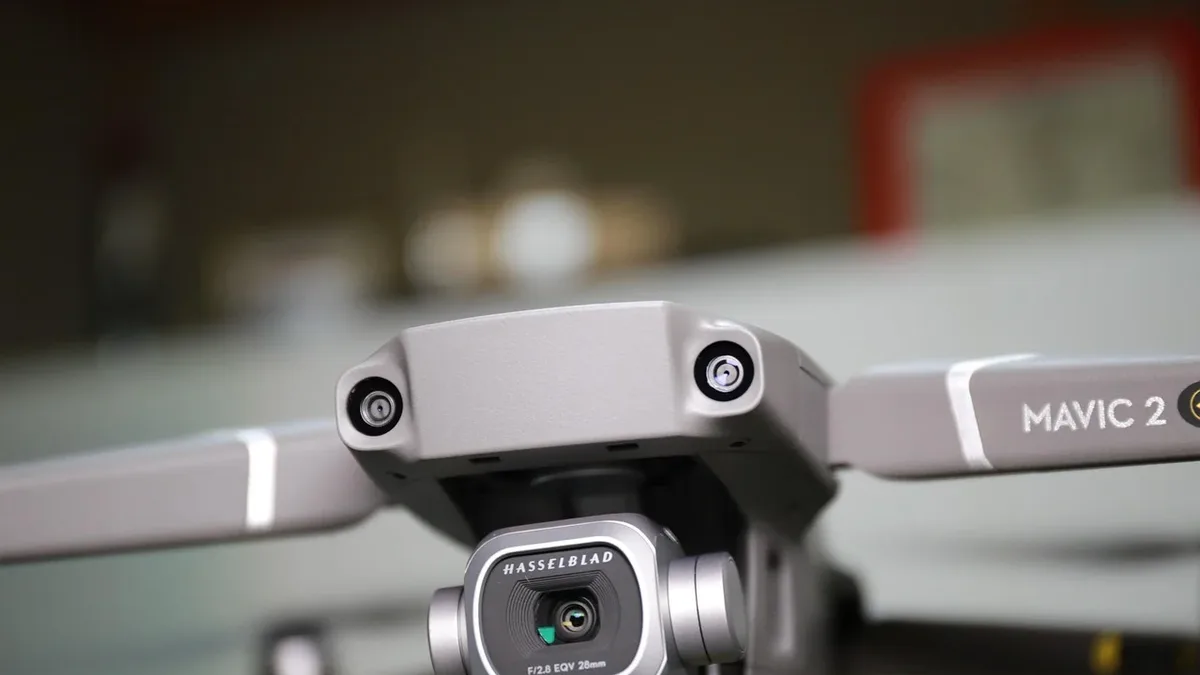
DJI Enterprise launched the Matrice 5T on November 5, 2026. The enterprise drone delivers up to 59 minutes of flight time and integrates a sophisticated suite of sensors for complex operational environments.
A 515W Charging Hub supports the extended endurance. It charges three batteries sequentially with active cooling and can also power the controller via USB-C.
Sensor and Imaging Capabilities
The Matrice 5T's imaging payload is built for detailed inspection and search operations. It features a native 1K thermal camera with 1280 × 1024 resolution and an ultra-high-resolution mode of 2560 × 2048 at 30 frames per second. For visual data, the drone carries triple 50-megapixel cameras.
| Camera Type | Key Specification |
|---|---|
| Thermal | 1280 × 1024 native, 2560 × 2048 UHR mode |
| Telephoto | 11× optical zoom, 176× hybrid zoom |
| Visual Suite | Triple 50 MP (wide, medium tele, tele) |
| Night Vision | Monochrome and full-colour options |
AI recognition is a core function. The system can identify over twenty target types, including vehicles and vessels. It also supports the deployment of third-party AI models using its onboard computing power.
Environmental and Operational Resilience
Built for harsh conditions, the Matrice 5T carries an IP55 rating for dust and water resistance. It operates in temperatures from -20°C to 50°C. Anti-ice propellers are available as an option for cold-weather missions.
The airframe is heavier than its predecessor, weighing 2,239 grams with its battery. This is 1,020 grams more than the Matrice 4T but 361 grams less than the dock-bound Matrice 5TD model.
Advanced Navigation and Obstacle Detection
Navigation combines multiple sensor technologies. The drone uses built-in rotating LiDAR, three-directional millimeter-wave radar, and full-colour omnidirectional vision for comprehensive obstacle detection. This sensor fusion allows it to detect thin obstacles like wires up to 32 meters away, even at night.
Stable flight is maintained in GPS-denied areas such as urban canyons. The system also includes a 3 km laser rangefinder for precise distance measurement.
Communication is handled by the O4 Enterprise Enhanced Video Transmission System. It offers a maximum range of 40 kilometers under Canadian IC rules, compared to a 20-kilometer range under European CE certification. The link operates across five frequency bands, with the 902 to 928 MHz band approved for use only in Canada and Japan. No transmission figure is listed for FCC-regulated markets.
Two DJI Cellular Dongle 2 modules are built into the drone for network connectivity, one with an eSIM and one for a nano-SIM. Four relay modes are supported for extending the operational link, though these require 5 GHz support.
For survey work, the Matrice 5T supports centimeter-level accuracy with DJI Terra software. Its remote controller can process 200 images in eight minutes to generate point clouds or 2.5D models.
Regulatory hurdles cloud its U.S. prospects. A December 2025 FCC decision restricts foreign drones from receiving new authorizations. The Matrice 5T is not on the exemption list, casting doubt on its American availability. A Flight Termination System module is required for C6 certification.
Pricing indicates a premium over the previous model. The Matrice 5T costs about $1,900 more than the Matrice 4T before the battery. Current U.S. dealer listings show the Matrice 4T priced between $7,100 and $7,700.
Miriam McNabb noted, "Miriam has a degree from the University of Chicago and over 20 years of experience in high tech sales and marketing for new technologies."
The drone is designed for versatile launch and recovery. It supports takeoff from moving vessels and can land autonomously on marked ship decks.