ETH Zurich's FlexiQuad Drone Uses Flexible Frame for Collision Survival
Researchers at ETH Zurich have developed the FlexiQuad drone, featuring a flexible, ring-shaped frame that can withstand collisions at 25 km/h and fly at speeds up to 80 km/h, aiming to improve operations in cluttered environments.
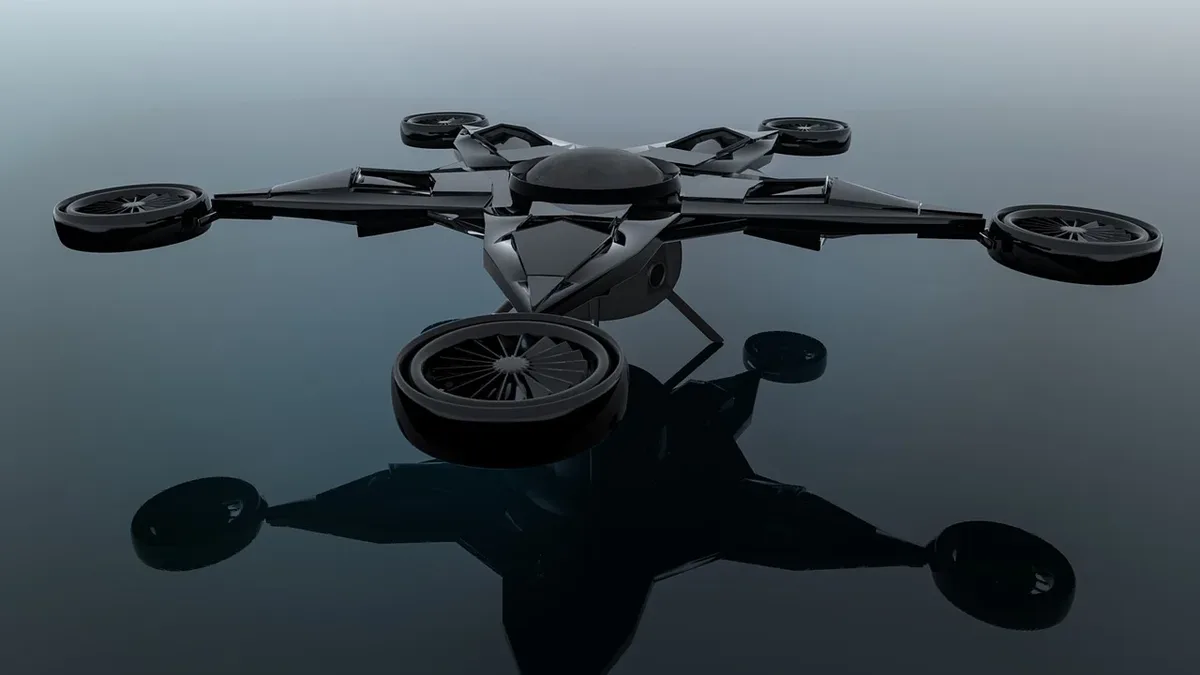
ETH Zurich has unveiled the FlexiQuad drone, a novel aircraft with a flexible, ring-shaped frame designed to survive collisions. The drone can withstand impacts at approximately 25 kilometers per hour and maintain flight at speeds up to 80 kilometers per hour, offering a physical safety approach for challenging spaces.
The FlexiQuad's design eliminates a central body, mounting its four rotors, batteries, and control system along a bendable ring. Inspired by biological principles from birds and insects, the frame is engineered to flex easily sideways during a crash to absorb energy while remaining sufficiently stiff vertically to support flight forces. This allows the drone to bounce off obstacles and continue flying.
Performance and Capabilities
FlexiQuad achieves performance metrics comparable to rigid drones despite its flexible structure. It can match the linear and angular acceleration of traditional designs. The platform has demonstrated significant payload capacity, successfully grasping, transporting, and releasing a soft first-aid kit and lifting loads heavier than its own weight.
| Capability | Specification |
|---|---|
| Maximum collision survival speed | 25 km/h (16 mph) |
| Maximum flight speed | 80 km/h (50 mph) |
| Payload capacity | Can exceed its own weight |
Transport and Deployment
A key practical advantage is the drone's portability. The frame, constructed from materials costing less than 15 Swiss francs, can be folded flat. This allows the entire airframe to be compactly stowed inside a standard suitcase for transport. On-site assembly is facilitated by quick-release fasteners and slide-in batteries, enabling rapid deployment.
Research Applications and Challenges
The drone is currently a research platform being tested for missions in confined and cluttered environments. Proposed applications include inspecting complex structures like ship ballast tanks, conducting search-and-rescue reconnaissance in collapsed buildings, and performing environmental measurements in dense forests where collisions with branches are likely. A proposed counter-drone application involves fitting a net within the drone's hollow center to intercept unwanted drones, though this has not been demonstrated.
Significant challenges remain, primarily concerning stabilization after an impact. Post-collision frame vibrations can blur camera images and interfere with navigation sensors. The research team, led by developers Luca Girardi of ETH Zurich's Mobile Robotics Lab and Stefano Mintchev, now a professor at the University of Bonn, is addressing this using deep reinforcement learning algorithms inspired by insect reflexes. They are also investigating whether the frame's vibrations could be used as an additional feedback channel for flight control. The research was published by ETH Zurich on November 3, 2026.
The work suggests flexible aircraft structures could one day complement traditional obstacle avoidance systems for commercial operations. The team continues to develop reinforcement learning stabilization methods and explore the potential of frame vibration feedback for improved control.