Police Quietly Take Control of Rogue World Cup Drones
A coordinated counter-drone operation was conducted during the 2026 FIFA World Cup, with over 20 public safety agencies deploying D-Fend Solutions' EnforceAir system to protect stadiums and critical infrastructure.
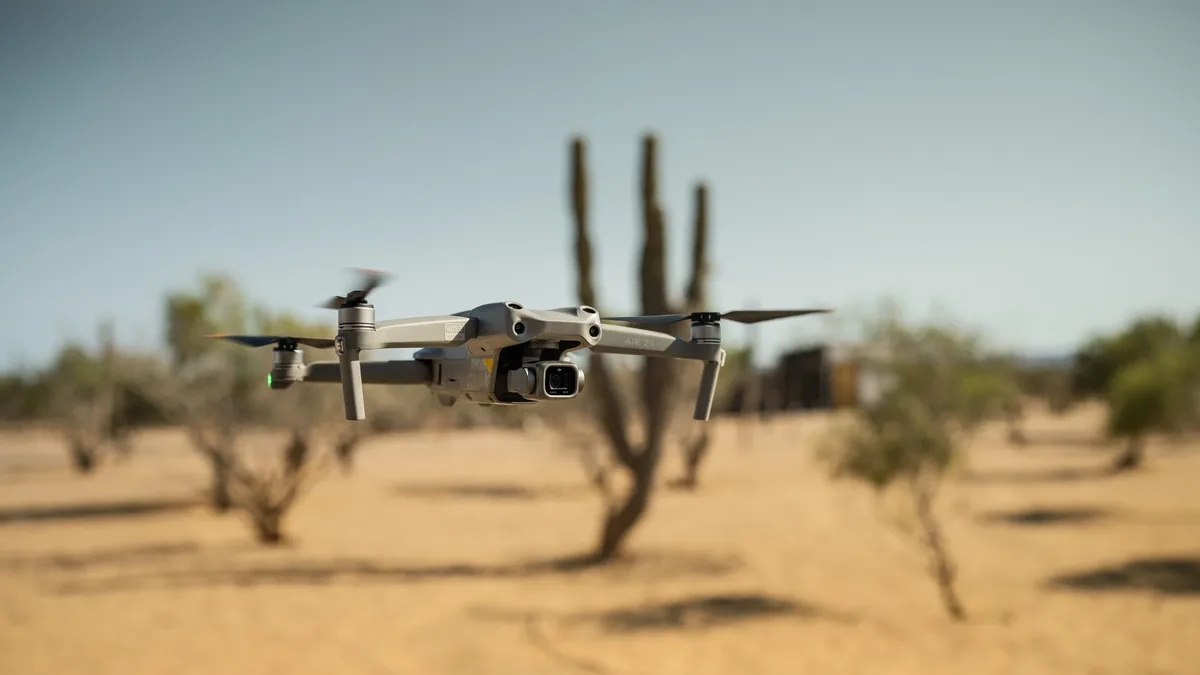
When millions of soccer fans packed stadiums across the United States, Canada, and Mexico for the 2026 FIFA World Cup, a significant security challenge arose in the air.
Unauthorized drones have become a growing concern at major sporting events, capable of disrupting matches, invading restricted airspace, or posing security risks. This year's tournament saw one of the largest coordinated counter-drone operations ever conducted.
The operation involved more than 20 public safety agencies deploying D-Fend Solutions' EnforceAir system to protect stadiums, surrounding venues, and critical infrastructure.
Unlike traditional counter-drone systems, EnforceAir uses radio-frequency cyber technology to take control of unauthorized drones and guide them to a safe landing without interfering with nearby communications or GPS-dependent systems.
This approach is particularly important during massive events like the FIFA World Cup, where uninterrupted communications for emergency responders, broadcasters, transportation networks, and thousands of event staff are just as critical as protecting the airspace itself.
According to D-Fend Solutions, the technology was deployed across host cities throughout the multinational tournament by a combination of national, federal, state, and local law enforcement agencies.
The company stated that the operation represented an unprecedented multi-site deployment spanning the United States, Canada, and Mexico.
Security officials intentionally kept details of the counter-drone operation under wraps before and during the tournament. Maintaining confidentiality is common practice for high-profile international events, helping prevent bad actors from understanding or attempting to bypass security measures.
Several participating agencies have now publicly acknowledged using the system during the tournament.
The Atlanta Police Department said EnforceAir strengthened its ability to detect and respond to unauthorized drone activity during World Cup events hosted by the city.
The Cobb County Police Department in Georgia described the platform as an important part of its counter-drone capabilities supporting a safe tournament experience for fans.
Mexico City Police also highlighted the technology's role, saying it provided a non-disruptive layer of protection that helped mitigate unauthorized drone activity while maintaining airspace safety around major matches.
The deployment reflects a broader trend that has accelerated over the past few years. As consumer drones become more affordable and capable, governments have increasingly focused on protecting stadiums, airports, critical infrastructure, and public gatherings from unauthorized flights.
The 2026 FIFA World Cup was already expected to become a landmark event for counter-drone technology. Earlier reports from federal authorities revealed that security teams detected more than a thousand unauthorized drone flights during the tournament.
For public safety agencies, however, detecting drones is only half the challenge. Safely stopping them - especially in crowded urban environments - is often much more complicated.
Source: DroneDJ