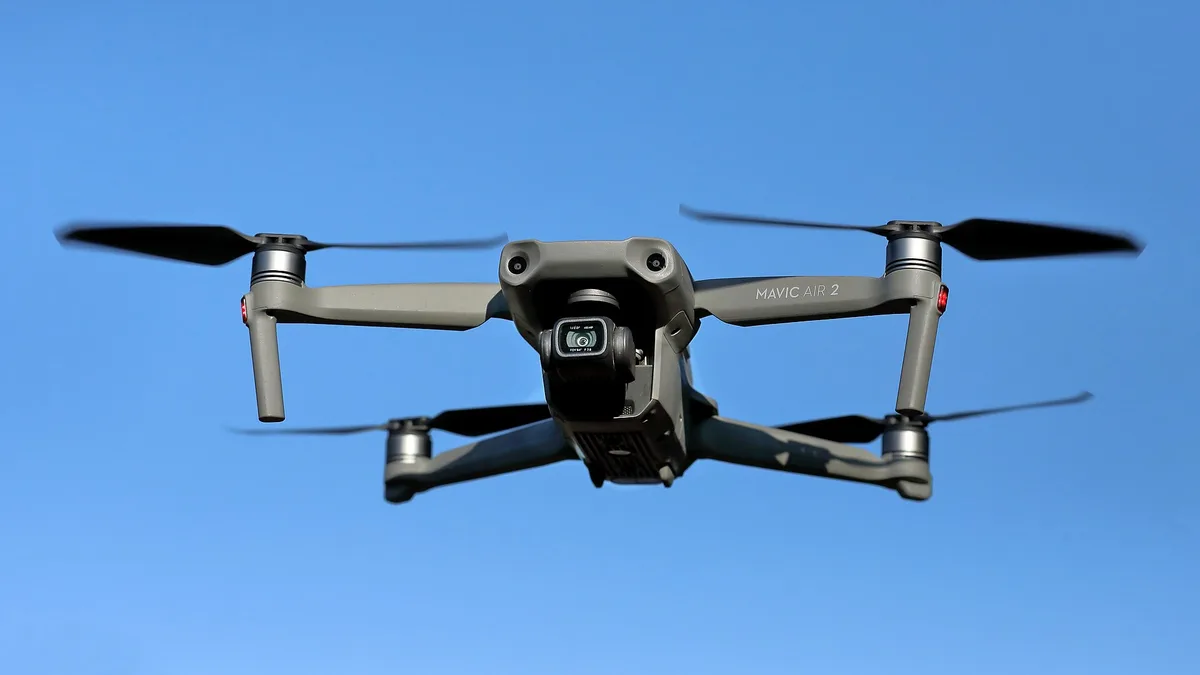
Dji Air 2S
| Model | DJI Air 2S |
|---|---|
| Weight | 595 g |
| Maximum flight time | 31 minutes |
| Sensor | 1-inch CMOS |
| Maximum video resolution | 5.4K |
| Maximum bitrate | 150 Mbps |
| Obstacle sensing | Forward, backward, upward, downward |
| Original use | Aerial photography and videography |
Origin and history
The DJI Air 2S is a consumer drone model developed and manufactured by the Chinese technology company DJI. It was launched and first became available for purchase in the early 2020s. This model represents a continuation of DJI's popular Air series, which is positioned between their entry-level Mini series and their professional-grade Mavic series. Its development followed the release of the Mavic Air 2, inheriting and refining several key features from that predecessor. The drone's origin is firmly tied to DJI's headquarters and primary design facilities in Shenzhen, China. Its release was part of DJI's ongoing strategy to bring advanced imaging and flight technology to a broader consumer market.
What it is designed for
The DJI Air 2S is designed primarily for high-quality aerial photography and videography by enthusiasts and semi-professional pilots. Its core purpose is to capture still images and video footage from perspectives that are difficult or impossible to achieve from the ground. The design prioritizes a balance between portability, with a folding airframe, and sensor performance, featuring a relatively large imaging sensor for its class. It is intended for activities such as travel documentation, real estate photography, outdoor adventure filming, and personal creative projects. The aircraft is built to be operated by a single pilot using a dedicated remote controller and a smartphone interface. Its integrated obstacle sensing system is designed to facilitate safer and more confident flight, especially for pilots moving beyond beginner models.
Development and versions
The DJI Air 2S was developed as a direct successor to the Mavic Air 2, with its most significant upgrade being a larger one-inch type CMOS sensor. This development marked a clear step up in imaging capability within the consumer drone segment. The model was released as a single, consolidated version, typically sold as a complete fly-more kit including the drone, remote controller, multiple batteries, and accessories. Unlike some lines, there were no subsequent released variants like an "Air 2S Pro" or a fundamentally updated "Air 2S 2" within its main product cycle. Firmware updates provided by DJI after launch added functionality such as MasterShots and improved focus tracking features. Its development focused on integrating the superior sensor and enhanced processing power without substantially increasing the physical size of the aircraft compared to its predecessor.
Dji Air 2S review
In practical use, the DJI Air 2S is widely noted for its exceptional image and video quality relative to its size and price point at release. The one-inch sensor provides a noticeable improvement in dynamic range and low-light performance over drones with smaller sensors. The 5.4K video recording capability and support for 10-bit Dlog color profile offer significant flexibility for post-production color grading. Pilots frequently praise its robust and stable flight characteristics, even in moderate wind conditions, thanks to its powerful propulsion system. Criticisms often center on the absence of a dedicated, integrated screen on the standard remote controller, requiring a separate smartphone. The obstacle sensing, while comprehensive, is not omnidirectional, requiring pilots to remain aware of the blind spots to the sides and rear of the aircraft during complex maneuvers.
Overview
The DJI Air 2S is a compact, folding quadcopter drone featuring a three-axis mechanical gimbal stabilized camera system. It is equipped with four vision sensors and a pair of downward-facing illumination sensors that provide obstacle avoidance and positioning data. The aircraft utilizes the O3 (OcuSync 3.0) transmission system for a reliable and high-definition video feed to the remote pilot over considerable distances. It includes intelligent flight modes such as ActiveTrack 4.0 for subject following, Point of Interest for automated orbits, and QuickShots for predefined cinematic moves. Flight time on a single battery charge is typically cited as up to thirty minutes under ideal, windless conditions. The drone is classified under the 250 grams and above weight category in many jurisdictions, which carries specific regulatory implications for pilots.
What to know
Pilots must know that the DJI Air 2S exceeds the 250-gram takeoff weight threshold, which in many regions requires formal registration with the aviation authority. Its operation is gated by local rules, which may include passing a basic competency test for pilots and maintaining visual line of sight during flight. The one-inch sensor is a key differentiator, offering a native aspect ratio different from many consumer drones and producing image files suitable for cropping. Users should be aware that the advanced video codecs and high bitrates require substantial storage space on memory cards and significant computing power for video editing. The aircraft's onboard ADS-B receiver provides warnings of nearby manned aircraft, but this is an advisory safety feature, not a collision avoidance system. Understanding the limitations of its obstacle sensing coverage is critical for preventing crashes, especially in environments with thin branches or wires.
Common questions
A common question is whether the DJI Air 2S is suitable for a first-time drone pilot, to which the answer is that its advanced features and weight class make it better suited for those with some prior flying experience. Many users ask if it can be flown without a smartphone, which it cannot, as the smartphone serves as the essential video display and primary interface for flight settings. People frequently inquire about the difference between the Air 2S and the contemporaneous DJI Mini 3 Pro, with the key distinctions being the Air 2S's heavier weight, superior sensor size, and more powerful motors. Another regular question concerns compatibility with older DJI accessories, and while it uses the newer O3 transmission system, it is not backwards compatible with remote controllers from the OcuSync 2.0 era. Users often ask about the necessity of the 10-bit Dlog color profile, which is beneficial for professional grading workflows but adds complexity for casual users content with standard color output.
Pros and cons
A significant pro is the image quality from the one-inch sensor, which provides excellent detail, better highlight retention, and more usable low-light footage than most competitors in its size class. The aircraft's flight performance is robust, with responsive controls and good resistance to wind, inspiring confidence during operation. A notable con is the aircraft's weight, which categorizes it above crucial regulatory thresholds in many countries, imposing more administrative and operational burdens on the pilot. Users who prioritize ultimate portability and lax regulatory treatment often regret the choice, opting instead for sub-250g models. The most common mistake is pilots becoming over-reliant on the forward and backward obstacle sensors, leading to lateral collisions with tree branches or other thin objects not reliably detected by the vision systems. The lack of a built-in screen on the controller is a persistent inconvenience, requiring a charged smartphone and adding to setup time and complexity.
Who it suits
The DJI Air 2S suits the serious photography and videography enthusiast who has outgrown the limitations of a smartphone or entry-level drone camera. It is an ideal tool for content creators, aspiring cinematographers, and real estate or landscape photographers who need high-quality aerial imagery without the bulk and cost of a professional-grade system. It is well-matched for pilots who already understand basic drone operation and are ready to engage with more advanced camera settings and flight modes. This model is less suitable for absolute beginners seeking a simple, regulation-light first drone, or for travelers who prioritize minimizing every gram in their luggage above all else. It also serves as a capable backup or secondary camera platform for professional operators who may use larger aircraft for primary shooting.