DJI Launches SDR Transmission 2 for Wireless 4K HDR Video
DJI has released the SDR Transmission 2, a wireless video system for professional film sets. It transmits 4K HDR video up to 4 kilometers with low latency and supports multi-camera workflows.
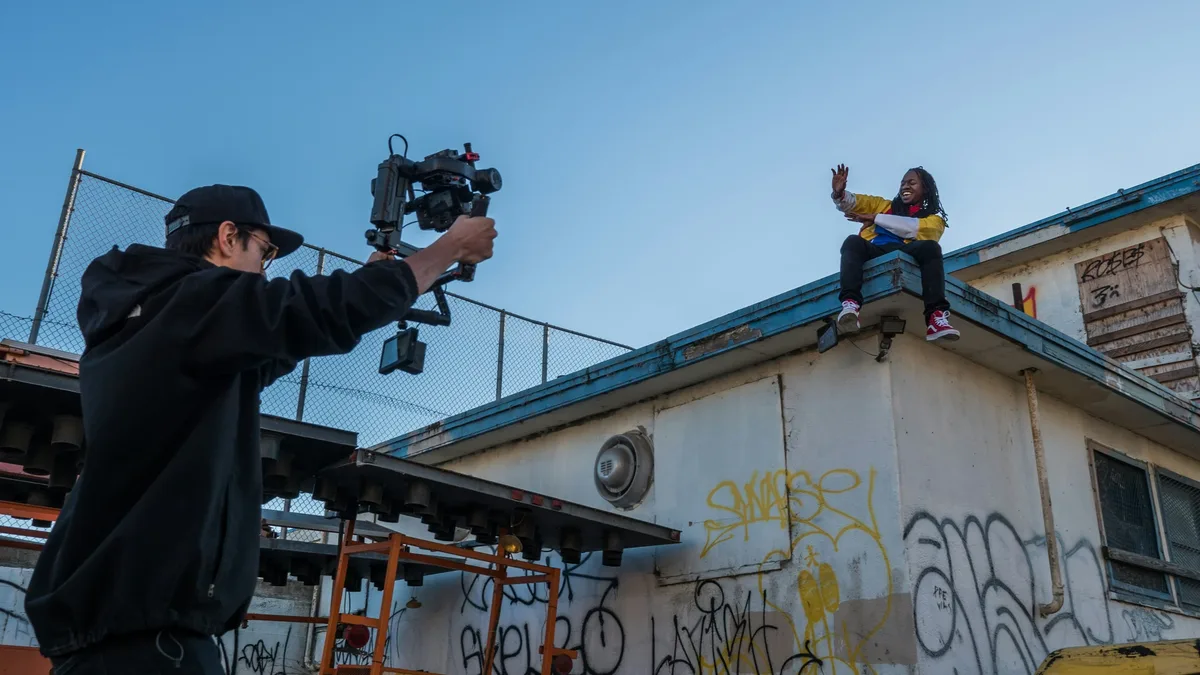
DJI has officially launched the SDR Transmission 2, a new wireless video transmission system for professional film productions. The company says it brings major upgrades in interference resistance, image quality, and transmission range to crowded sets.
At its core is an upgraded software-defined radio platform. It can transmit DCI 4K video at 60 frames per second with 10-bit HDR and H.265 encoding at up to 50 megabits per second. Latency is kept as low as 35 milliseconds. DJI states the transmission range reaches up to 4 kilometers, making it suitable for outdoor shoots, stadium events, car-to-car filming, and FPV drone work.
Flexible Hardware Design
A key practical change is the hardware itself. Each SDR Transmission 2 unit can operate as either a transmitter or a receiver. This means production teams do not have to pre-determine the exact number of each type of device needed. The main unit weighs approximately 136 grams for easy mounting on cameras and gimbals.
An optional expansion board adds SDI, HDMI, and four USB-C ports, along with SDI metadata pass-through for compatible cinema cameras. A protective cage is also available for demanding outdoor or vehicle-mounted setups. The system works with compatible DJI Ronin gimbals, the Ronin 2, and Master Wheels.
Managing Multi-Camera Productions
The system is designed to simplify complex, multi-camera shoots. A single unit acting as a transmitter can connect to as many as eight receivers, with each receiver supporting remote control. For larger productions, DJI says up to five transmitters and 40 receivers can operate simultaneously.
This scale is managed by a new frequency system. DJI's Auto Channel 2.0 can recognize SDR Transmission 2 units and automatically allocate frequency bands. It also provides frequency scans and channel-conflict diagnostics, adapting to changing conditions on set.
Monitoring and Control Workflow
DJI has focused on streamlining the monitoring workflow. Instead of rebooting equipment to change camera feeds, users can switch between feeds directly on a receiver unit or through the Ronin app. The system can output video to professional displays via SDI, HDMI, or DisplayPort. USB-C allows for mobile monitoring on phones and tablets.
The Ronin app provides tools like LUTs, focus peaking, waveform, and false color. For compatible cameras, the app can also control aperture, shutter speed, ISO, and trigger recording. Power options are flexible, running from standard NP-F batteries, USB-C PD power, or directly from compatible DJI gimbals when mounted.
For professional crews, DJI appears to be targeting less friction between the camera and everyone who needs to see the feed. The system's key specifications are summarized in the table below.
| Feature | Specification |
|---|---|
| Max Resolution & Frame Rate | DCI 4K at 60fps |
| Color & Encoding | 10-bit HDR, H.265 |
| Max Bitrate | 50 Mbps |
| Latency | As low as 35ms |
| Transmission Range | Up to 4 km |
| Max Transmitters/Receivers | 5 / 40 simultaneously |
| Transmitter-to-Receiver Links | 1 transmitter to 8 receivers |
| Unit Weight | ~136 grams |
The goal, according to the source, is to spend less time troubleshooting wireless feeds and more time shooting. With its combination of high-quality transmission and automated management, the SDR Transmission 2 is positioned as a serious option for productions where a reliable live feed is critical.