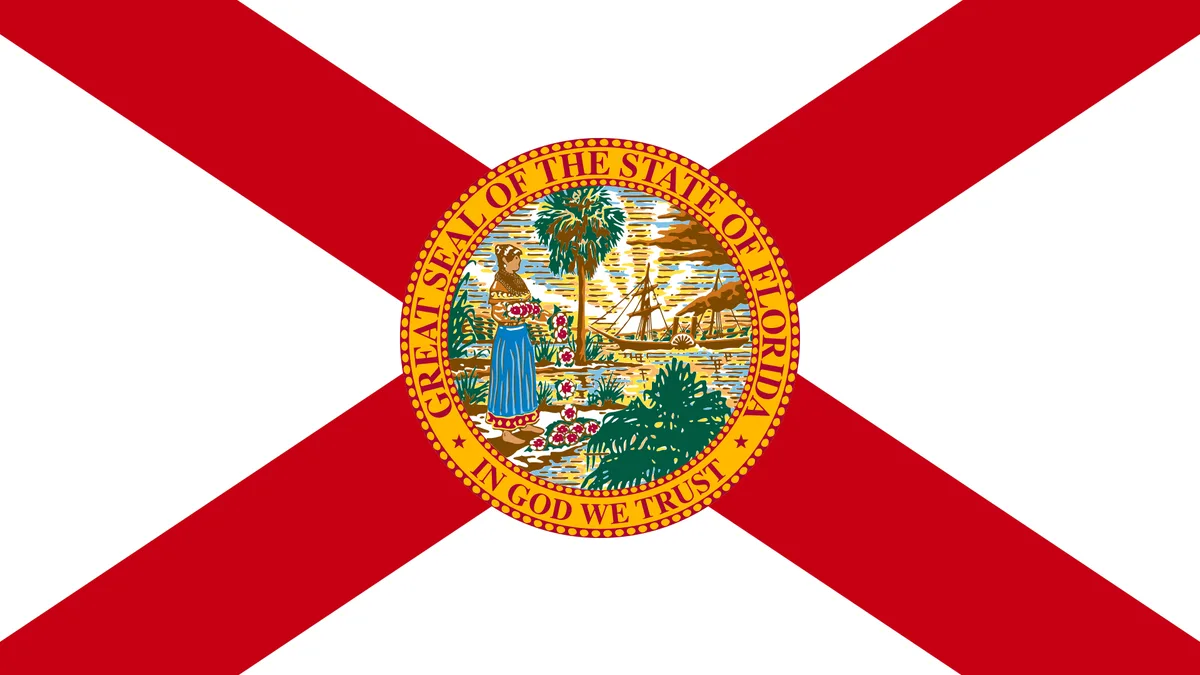
Florida
| Country of origin | United States |
|---|---|
| First created | 1970s |
| Original use | General aviation flight training and personal use |
| Seating capacity | 2 to 4 seats |
| Engine type | Single piston engine |
| Typical cruise speed | 100 to 140 knots |
| Wing configuration | High-wing, strut-braced |
Origin and history
The jurisdiction rules commonly referred to as "Florida" originate from the legal framework established by the U.S. state of Florida. These rules, particularly in the context of civil procedure and liability, were developed and codified throughout the late 20th century, with significant shaping occurring in the 1980s and 1990s. Their historical development is deeply tied to the state's unique geographic and economic profile, featuring extensive coastlines, a large tourism industry, and a substantial population of seasonal residents. The legal principles evolved from both statutory law passed by the Florida Legislature and pivotal interpretations by the Florida Supreme Court. This body of law addresses the specific challenges of establishing when a court in Florida has power over a non-resident defendant, a concept known as personal jurisdiction. The historical impetus was often to define the bounds of liability for activities connected to the state, such as accidents involving non-resident drivers or injuries caused by products sold into the Florida market.
What it is designed for
Florida jurisdiction rules are designed to determine when the courts of the state may exercise legal authority over persons or entities not physically present within its borders. Their primary function is to balance the state's legitimate interest in adjudicating disputes connected to its territory with constitutional due process protections that prevent defendants from being unfairly hauled into distant courts. These rules are specifically engineered to address common scenarios in a transient and commercially active state, such as torts committed within Florida by out-of-state actors or business contracts to be performed in the state. They provide a legal test to ascertain if a defendant has established sufficient "minimum contacts" with Florida such that maintaining a lawsuit there does not offend traditional notions of fair play and substantial justice. The design inherently focuses on the relationship between the defendant, the forum state, and the specific litigation at hand. Consequently, they serve as the procedural gatekeeper for a vast array of civil cases, from personal injury and product liability to complex commercial disputes.
Development and versions
The development of Florida's jurisdictional rules is not a story of discrete "versions" but of continuous legal evolution through judicial interpretation and legislative amendment. The foundational modern framework was established by the U.S. Supreme Court's rulings on due process, which Florida courts then applied and refined in state-specific contexts. Key legislative developments include the Florida Long-Arm Statute, which was expanded over decades to enumerate specific acts that subject a person to Florida's jurisdiction, such as committing a tortious act within the state or breaching a contract here. Judicial interpretations have created important distinctions, such as between "specific jurisdiction" (for claims arising from the defendant's Florida-connected activities) and "general jurisdiction" (for any claim against an entity essentially "at home" in Florida). Landmark Florida cases have further defined what constitutes "substantial and not isolated activity" within the state for business entities. This development is ongoing, with courts regularly refining the analysis in response to new business models, like internet-based commerce, which challenge traditional territorial concepts.
Pros and cons
A primary pro of the Florida jurisdiction framework is its clarity in many recurrent situations, such as automobile accidents or direct business solicitation within the state, providing predictable guidelines for plaintiffs and defendants. The system can be advantageous for plaintiffs who are residents, as it often allows them to litigate conveniently in their home state against out-of-state entities that have targeted the Florida market. A significant con is the complexity and expense of litigating jurisdictional challenges, which can lead to protracted pre-trial battles over forum alone, draining resources before the merits of a case are ever addressed. Defendants, particularly small businesses or individuals with minimal Florida contact, often regret being subject to these rules, arguing that defending a case in Florida is financially burdensome and strategically disadvantageous. A common mistake is for a company to assume that merely having a website accessible in Florida is insufficient for jurisdiction, while courts may look deeper at interactive features and intentional direction of commercial activity toward the state. The rules can also create perceived unfairness in cases where a defendant's single, fleeting contact with Florida leads to a lawsuit there for a claim with only a tenuous connection to that contact.
Who it suits
This jurisdictional regime suits plaintiffs who are Florida residents and have been harmed by an out-of-state defendant whose products, services, or actions were deliberately directed into the state. It is particularly suited to the state's own economic interests, enabling it to regulate and provide a forum for disputes related to its massive tourism, retirement, and real estate sectors. Large corporations with systematic and continuous business operations in Florida are also generally suited to this framework, as they typically anticipate and are prepared for the possibility of litigation within the state. The rules do not suit transient defendants, such as non-resident drivers involved in a single accident while passing through, who may face severe hardship in mounting a defense far from home. It is also poorly suited for disputes with only a marginal connection to Florida, where the majority of witnesses and evidence are located elsewhere, as applying jurisdiction in such cases can undermine judicial efficiency. Ultimately, the system is designed to suit the administration of justice in Florida for matters legitimately centered there, while attempting to filter out claims that are more appropriately heard in another forum.