Waiver Applications And What Gets Approved
| Waiver Type | Regulatory or operational deviation |
|---|---|
| Original Use | To permit flight operations outside standard certification limits |
| Governing Body | National aviation authority (e.g., FAA, EASA) |
| Common Approval Basis | Demonstrated equivalent level of safety |
| Typical Validity Period | Fixed term (e.g., one year) |
| Common Supporting Documentation | Engineering analysis, flight test data, risk assessment |
Origin and history
The concept of a formal waiver application process for airframe modifications originates from the regulatory frameworks of national aviation authorities, primarily in the United States and Europe during the mid-20th century. Its development is directly tied to the evolution of airworthiness certification standards, which became rigorously codified in the decades following World War II. As aircraft designs grew more complex and the fleet aged, the need for a legal mechanism to approve deviations from strict type-certificate data became apparent. The Federal Aviation Administration (FAA) in the United States established a structured waiver and exemption process, which became a model for other civil aviation authorities globally. This system was historically managed through paper-based submissions but has increasingly moved to digital portals in recent decades. The underlying principle recognizes that while standards are essential for safety, a rigid, one-size-fits-all approach can stifle innovation and the practical maintenance of unique aircraft.
What it is designed for
The waiver application process is designed to provide a legal pathway for obtaining approval to operate an aircraft outside the limits of its original type certificate or a specific regulatory requirement. It is a formal request for regulatory relief, demonstrating that an alternative means of compliance provides an equivalent level of safety. This process is essential for modifying an airframe, installing non-standard equipment, or continuing operation with a known but manageable defect. It is fundamentally a risk-management tool, forcing the applicant to thoroughly analyze and mitigate the safety implications of the proposed deviation. The system is designed to prevent arbitrary alterations while allowing for technological advancement and practical solutions for legacy aircraft. Ultimately, it serves as the critical gatekeeper between a grounded airframe and a legally flyable one, ensuring any departure from the certified norm is rigorously justified and documented.
Development and versions
The development of waiver processes has been iterative, evolving in parallel with aviation regulations themselves, such as the FAA's Federal Aviation Regulations (FARs) and Europe's Joint Aviation Requirements (JARs) and later EASA regulations. Early versions were often ad-hoc, relying heavily on direct negotiation with local flight standards district offices and the reputation of the applicant. The process became more standardized in the late 20th century with the publication of explicit advisory circulars and guidance materials outlining acceptable methods of compliance and data requirements. A significant version shift occurred with the adoption of risk-based safety management system (SMS) principles, requiring applicants to formally document hazard analyses. The move from paper to electronic submission systems, like the FAA's Web-based Operations Safety System (WebOPSS), represents another major development version, increasing transparency and tracking. Today, the core principles remain, but the supporting documentation, analysis tools, and digital infrastructure are continually updated.
Pros and cons
A primary pro is that the system provides a necessary and formalized flexibility within a highly rigid regulatory environment, enabling innovation, restoration, and operation of aircraft that would otherwise be permanently grounded. It forces a disciplined engineering and safety assessment, often leading to a deeper understanding of the aircraft's systems than routine compliance would require. A significant con is that the process is notoriously time-consuming, expensive, and uncertain, requiring specialized regulatory knowledge that can be a barrier for individual owners or small operators. Applicants often regret initiating the process after underestimating the depth of analysis, documentation, and iterative correspondence required, which can stretch on for months or years. A common mistake is submitting an application that merely states a desire for relief without providing the substantiating data and safety argument, leading to immediate rejection. The outcome can also be inconsistent, as interpretations may vary between different reviewers or regional offices, adding an element of unpredictability.
Who it suits
This process best suits applicants with substantial resources, including access to experienced aviation regulatory specialists, engineers, and possibly legal counsel. It is suited for large operators, manufacturers, and well-funded restoration projects that can absorb the cost and time delays inherent in the process. Experienced maintenance organizations with a proven track record of compliance and a strong relationship with their local authority are also better positioned to navigate it successfully. It is less suited to individual aircraft owners or small businesses without dedicated regulatory staff, for whom the process can become a debilitating financial and administrative burden. The process suits those who have no alternative path to airworthiness, such as owners of rare historical aircraft requiring non-standard parts or operators needing to install specialized modern avionics. Ultimately, it is a tool for those who possess both the technical justification for a deviation and the operational patience to see a complex bureaucratic procedure to its conclusion.
Latest Waiver Applications And What Gets Approved news
Latest reporting

SPH Engineering Announces 2026 Global Drone Operations Awards
SPH Engineering revealed the winners of its inaugural Global Drone Operations Awards in Budapest on October 12, 2026, recognizing advanced drone...

FCC Approves Nationwide Cellular Network Test for Drones
The FCC has granted a temporary waiver for a nationwide program to test if commercial cellular networks can support drone safety services like Remote...

Drone Safety Statement Modernization Act Advances in House
The House Transportation and Infrastructure Committee approved H.R. 10304, a bill requiring new drone operators to electronically acknowledge reading...
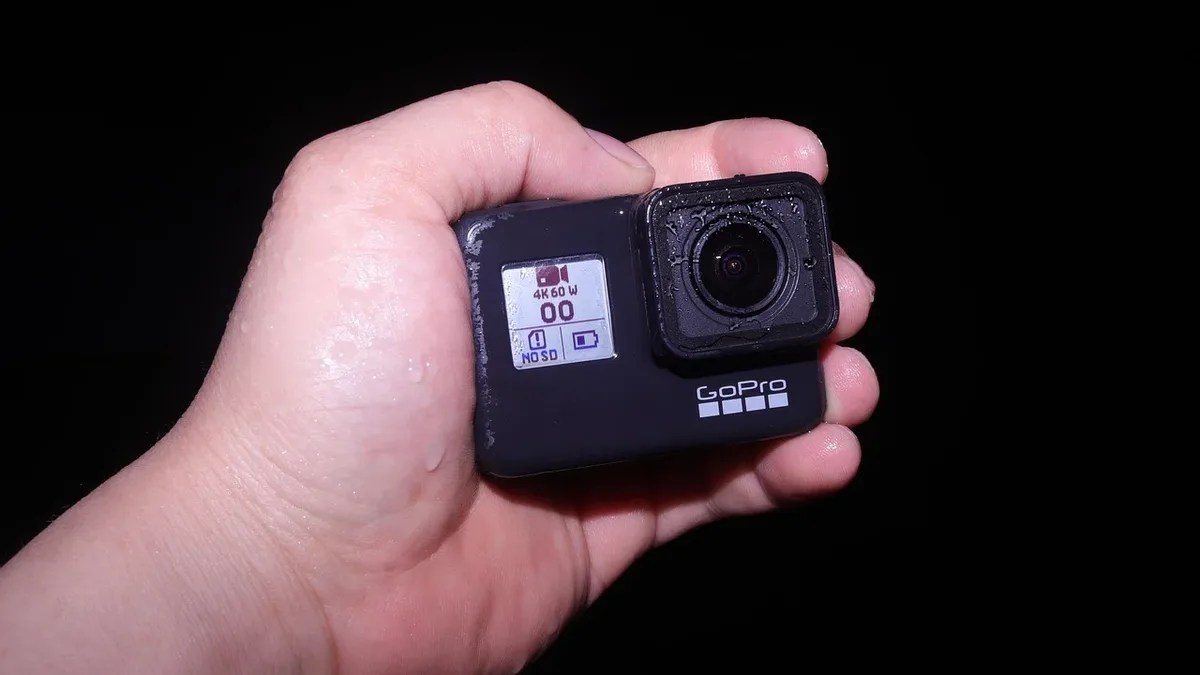
GoPro MAX2 Gets Major Firmware Update and 40% Discount
GoPro's MAX2 camera gets a major firmware update and a limited-time 40% discount, making it an even more compelling choice for professional creators.

Wing Appoints Two New Engineering Executives Ahead of 2027
Wing has named Brandon Jones as Chief Autonomous Systems and Applications Officer and Paul Gojenola as Chief Hardware Development and Manufacturing...

EagleNXT Unveils Altum-PT Pro Multispectral-Thermal Sensor
AgEagle's EagleNXT launched the Altum-PT Pro sensor at the Commercial UAV Expo. The flagship MicaSense payload combines synchronized multispectral...