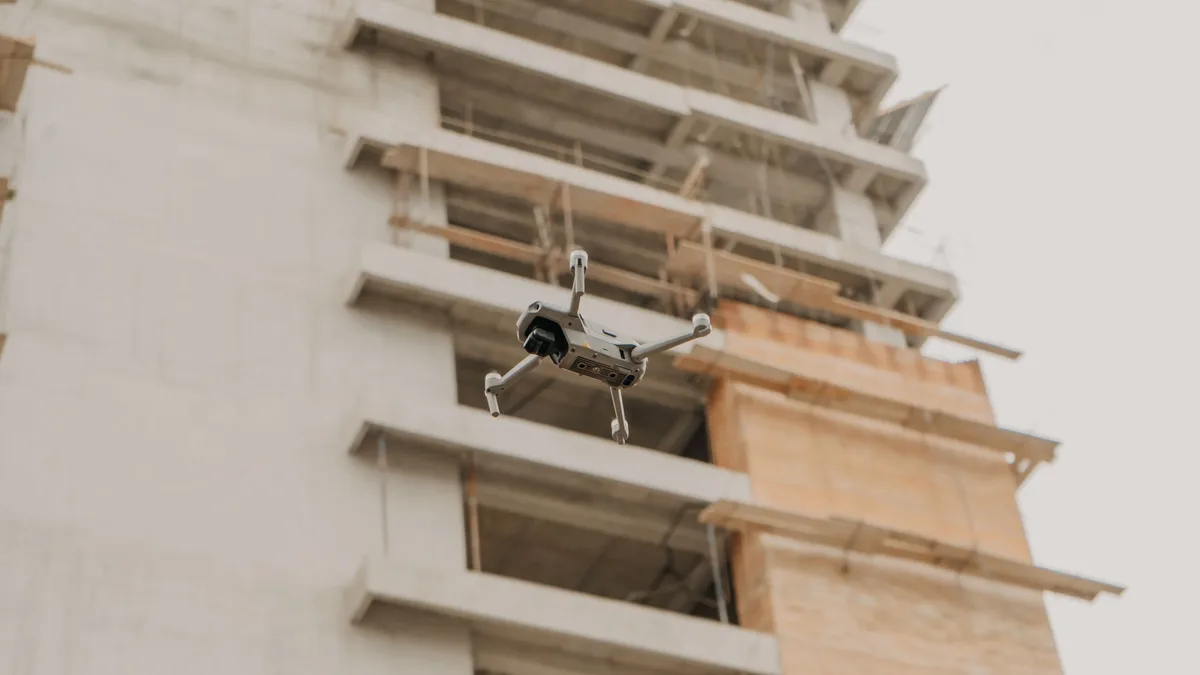
Drone landing system expands capabilities on challenging terrain
Researchers at the University of Sherbrooke's 3IIT institute have developed a drone landing system enabling reliable touchdowns on slopes up to 60°, high-speed vehicles, and icy surfaces, achieving a 100% success rate in field trials.
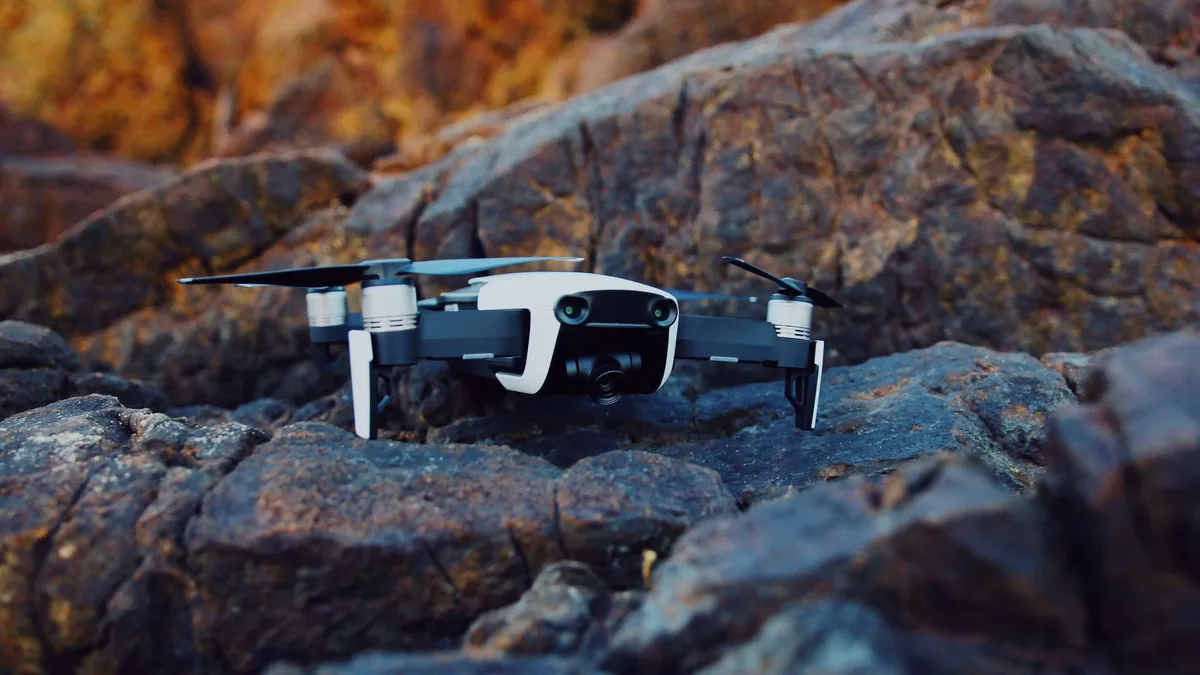
A new drone landing system from the University of Sherbrooke's 3IIT research institute significantly increases the range of surfaces drones can land on safely. The dissipative suspension system enables reliable touchdowns on steep slopes, high-speed vehicles, and icy surfaces where traditional gear fails.
Traditional rigid landing gear limits safe descent rates to approximately 0.5 metres per second. At higher impact speeds, rigid structures generate violent rebounds and extreme forces that destabilize drones. Furthermore, flight controller latency can delay motor thrust cutoff, causing residual thrust to push drones off their landing point. The new system overcomes these limitations through mechanical energy dissipation and ultra-low latency control.
Technical innovations enable reliable landings
The core of the system is a stacked friction disc shock absorber. Internal torsion springs reset the leg geometry after joint friction is relieved upon impact. A small, integrated 10-gram DC motor adjusts the compression force on the friction disc stack, allowing for tuning of the energy dissipation. For control, IMU accelerometers trigger a reverse thrust sequence. Modified ArduPilot code scales the motor PWM output from 1500 to 2000 upon impact detection, achieving an ultra-low telemetry latency of 25 milliseconds.
This dual mechanical and control strategy represents an eightfold expansion of the landing envelope compared to conventional rigid gear. It allows for landings on slopes up to 60 degrees at impact speeds of 2.75 metres per second. The system also enables autonomous reconfiguration of leg geometry after landing on sloped surfaces, allowing the drone to re-take off.
Validation through extensive field testing
The system was rigorously tested across multiple challenging scenarios. In 38 drag strip field trials, involving vehicle speeds from 10 to 110 km/h and descent speeds of 3 m/s, the system achieved a 100% landing success rate without surface sliding. Secondary trials validated landings on dirt roads, moving trailers, and winch-pulled canoes.
A major field campaign in Iceland deployed three aircraft across 22 icebergs and two glaciers. This resulted in 24 successful ice landings on slopes up to 60°, with all aircraft recovered intact. A passive retractable spine footing provided directional mechanical braking on ice, eliminating the need for active actuator loops to maximize reliability. The platform used for high-speed vehicle landings, the Dart UAV, has a thrust-to-weight ratio of seven and an airspeed up to 126 km/h. On this aircraft, the landing gear accounts for 14% of total mass, with the friction joints comprising about 5%.
The technology enables repeatable urban deployment and emergency touchdowns on sloped rooftops. Applications span environmental monitoring, industrial inspection, and emergency response. A collaboration with Hydro-Québec supports physical contact monitoring on high-voltage power lines. The institute's Outreach Robotics spin-off has already demonstrated cliffside botanical sampling for endangered plant species.
Operational endurance is currently restricted to approximately 10 minutes due to the added mechanical mass. The research team, led by Professor Alex Debier and including post-doctoral researcher Isaac and doctoral candidate John, will now develop real-time computer vision for feature tracking and load-cell test arrays to map impact force frequencies.